Tell us about the job
Takes about a minute. No obligation.
A contractor quoting a heat pump installation in Smith County has to account for what the local climate actually demands before settling on equipment or configuration. 116 severe weather events were recorded in Smith County, Tennessee between 2015 and 2024. At that rate, severe weather is a standing feature of operating conditions here, and a system sized or installed without accounting for that load will be working against the climate from day one. Refrigerant line placement, electrical connections, and unit siting all carry more consequence in a county where the equipment faces this kind of sustained pressure. A contractor who treats those choices as standard catalog calls is pricing for somewhere else.
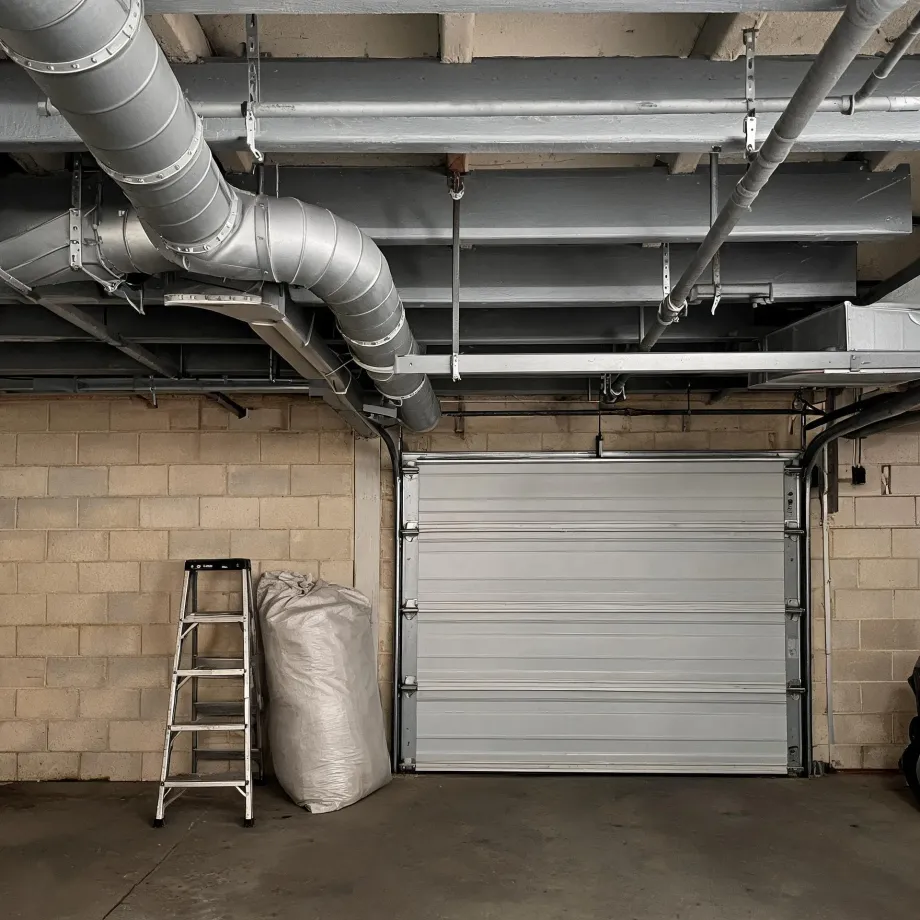
Ductwork laid down for an older heating system carries assumptions about static pressure and airflow that a heat pump does not share, and in Smith County that mismatch is what a contractor spends time resolving before the new unit ever goes in. Half the homes in Smith County, Tennessee were built in 1988 or earlier (2020-2024 ACS 5-year). That puts a large share of the housing stock in the range where the existing duct layout was designed around something different, and a contractor will check whether it can move the volume a heat pump needs before pricing the equipment itself. Electrical service gets the same scrutiny: a panel from that era may not have the capacity a modern heat pump draws without an upgrade.
What Gets Installed With a New Heat Pump
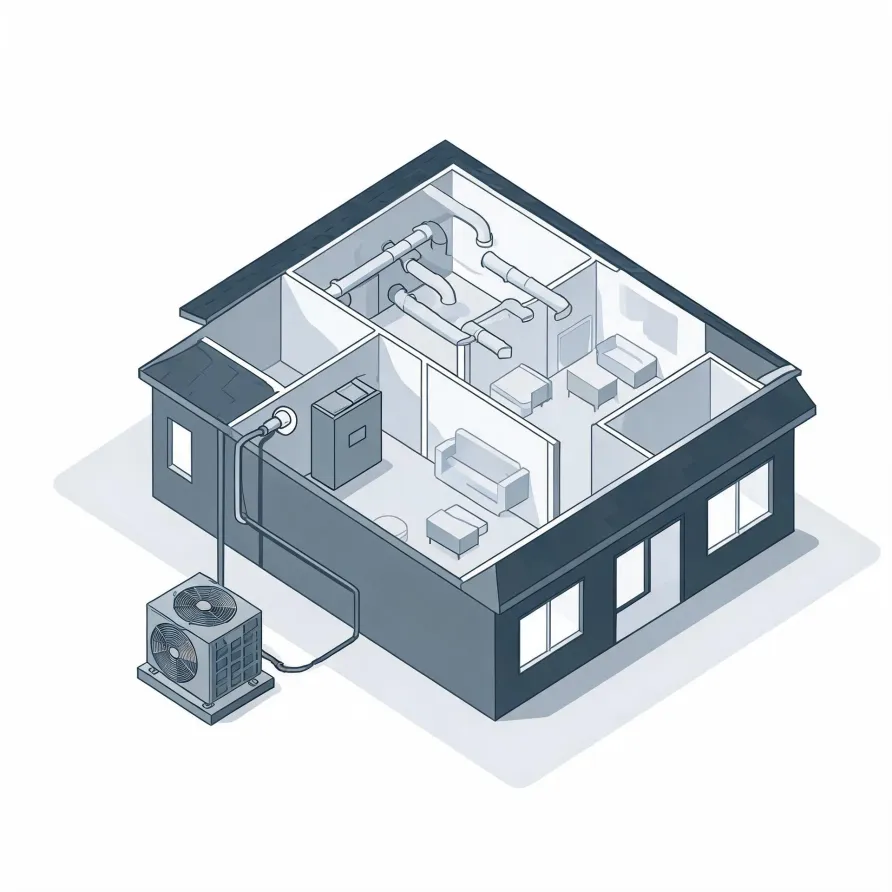
The outdoor unit is the piece most homeowners spot first, a metal cabinet set on a concrete pad outside the house that holds the compressor and the outdoor coil. Inside, an air handler mounts in a utility closet, attic, or basement and pushes conditioned air through the home. Together these two units are the core of what a contractor installs.
A refrigerant line set runs between the outdoor unit and the air handler, connecting the two through a small penetration in the wall. A thermostat goes on an interior wall where it reads the temperature of the living space and tells the system when to run. Some installations also include a supplemental heat strip inside the air handler for the coldest days.
The drawing shows a typical layout, and a licensed contractor determines exactly what applies to your house.
Find a contractor in Smith CountySmith County by the Numbers
116 severe weather events were recorded in Smith County, Tennessee between 2015 and 2024.
NOAA National Centers for Environmental Information, Storm Events Database, bulk CSV export, events 2015-01-01 through 2024-12-31.Half the homes in Smith County, Tennessee were built in 1988 or earlier (2020-2024 ACS 5-year).
U.S. Census Bureau, 2020-2024 American Community Survey 5-Year EstimatesSmith County, Tennessee holds 8,752 housing units (2020-2024 ACS 5-year).
U.S. Census Bureau, 2020-2024 American Community Survey 5-Year EstimatesOwners occupy 76.9% of the occupied homes in Smith County, Tennessee (2020-2024 ACS 5-year).
U.S. Census Bureau, 2020-2024 American Community Survey 5-Year EstimatesCodes & Standards Governing Heat Pump Installation in Smith County, Tennessee1 sourced rules and standards
Licensing Rules for HVAC Work in Smith County, Tennessee
Tennessee licenses contractors by classification, and HVAC, refrigeration and gas piping is one of them — a sub-classification of mechanical contracting on the licence the Board for Licensing Contractors issues.
Severe Weather Events in Smith County
Smith County's climate puts real demands on heating and cooling equipment, and those demands are tied directly to what the weather does here year over year. A heat pump sized and installed for local conditions handles that workload differently than one spec'd for a milder place.
116 severe weather events, 2015–2024. Source: NOAA National Centers for Environmental Information, Storm Events Database.