Tell us about the job
Takes about a minute. No obligation.

Sizing a heat pump for a Washington County home is a local question because the climate here has a documented weather history that a contractor has to account for, but that history does not make storm load the controlling variable. 84 severe weather events were recorded in Washington County, Tennessee between 2015 and 2024. At roughly the national midpoint, this is a county where severe weather happens and is worth factoring in, but where age, duct layout, and installation quality determine how a system performs far more than weather exposure does. A contractor quoting a new installation here works through Manual J load calculations and inspects existing ductwork before specifying equipment, because those variables explain most of what the system will be asked to do.
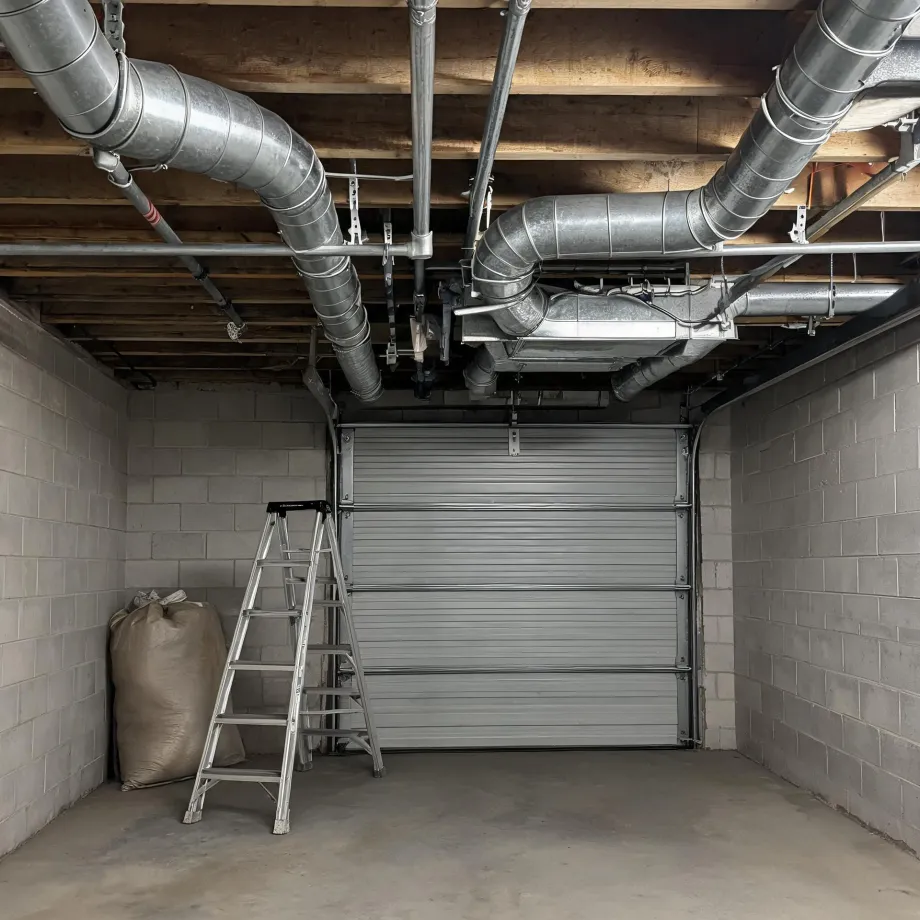
Ductwork laid down for a furnace-and-air-conditioner setup carries different static pressure requirements than a heat pump system, and whether the existing runs can handle that difference is the first thing a contractor has to settle. Half the homes in Washington County, Tennessee were built in 1985 or earlier (2020-2024 ACS 5-year). That puts a lot of Washington County homes in a range where the ducts were sized and routed for equipment with a different delivery profile, which means the duct assessment shapes the quote as much as the unit selection does. A contractor who skips that step prices the wrong job.
What Gets Installed With a New Heat Pump
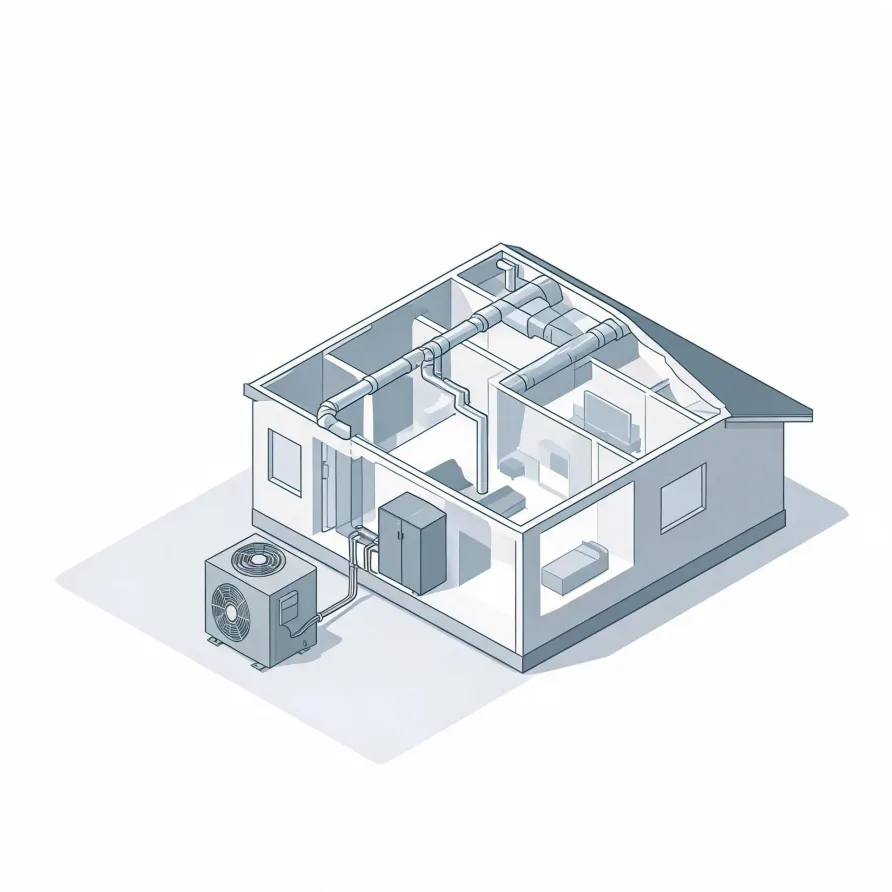
The outdoor unit is the piece a homeowner notices first. It sits on a pad beside the house and holds the compressor and the outdoor coil, which are the heart of the system. Inside, the air handler mounts in a utility closet, attic, or basement and moves conditioned air through the home.
A refrigerant line set connects the two units, running through the wall or along the exterior to carry refrigerant between them. A thermostat goes on an interior wall and gives the homeowner control over the whole system. Some installations also include an auxiliary heat strip inside the air handler for the coldest days.
The drawing shows a typical layout, and a licensed contractor determines exactly how each piece is positioned and connected in your house.
Find a contractor in Washington CountyWashington County, Tennessee, by the numbers
84 severe weather events were recorded in Washington County, Tennessee between 2015 and 2024.
NOAA National Centers for Environmental Information, Storm Events Database, bulk CSV export, events 2015-01-01 through 2024-12-31.Half the homes in Washington County, Tennessee were built in 1985 or earlier (2020-2024 ACS 5-year).
U.S. Census Bureau, 2020-2024 American Community Survey 5-Year EstimatesWashington County, Tennessee holds 62,077 housing units (2020-2024 ACS 5-year).
U.S. Census Bureau, 2020-2024 American Community Survey 5-Year EstimatesOwners occupy 64.5% of the occupied homes in Washington County, Tennessee (2020-2024 ACS 5-year).
U.S. Census Bureau, 2020-2024 American Community Survey 5-Year EstimatesCodes & Standards Governing Heat Pump Installation in Washington County, Tennessee1 sourced rules & standards
Licensing and Legal Requirements in Washington County, Tennessee
Tennessee licenses contractors by classification, and HVAC, refrigeration and gas piping is one of them — a sub-classification of mechanical contracting on the licence the Board for Licensing Contractors issues.
Severe Weather Events in Washington County
Weather extremes put real hours on heating and cooling equipment. A heat pump sized and installed for local conditions holds up better than one that was not, which is why the weather record here belongs in any honest conversation about HVAC work in Washington County.
84 severe weather events, 2015–2024. Source: NOAA National Centers for Environmental Information, Storm Events Database.