
How long heat pumps last in Tennessee

Send the form and stop researching installers for the new heat pump.

Let a pro reach out

How long do heat pumps last in Tennessee?

Your heat pump runs double duty here, since most Tennessee homes lean on it for both the muggy summers and the heat all winter. With that much use, you want a real number before you decide whether to fix the one you have or plan for a new one next season.

About 15 years, often less with the load Tennessee puts on one

A heat pump in Tennessee typically lasts around 15 years. That number comes down from the usual 15 to 20 you'll see quoted nationally, because here the same unit handles both your heat and your air conditioning. There's no furnace splitting the work in winter, so the compressor runs more months out of the year than it would in a place with milder summers or a separate heating system. More run hours wear the same parts faster. Where you land in that range depends on how the unit was sized for your house and how well it's been serviced, but planning around 15 years is realistic if you heat and cool with electricity like most homes here do.

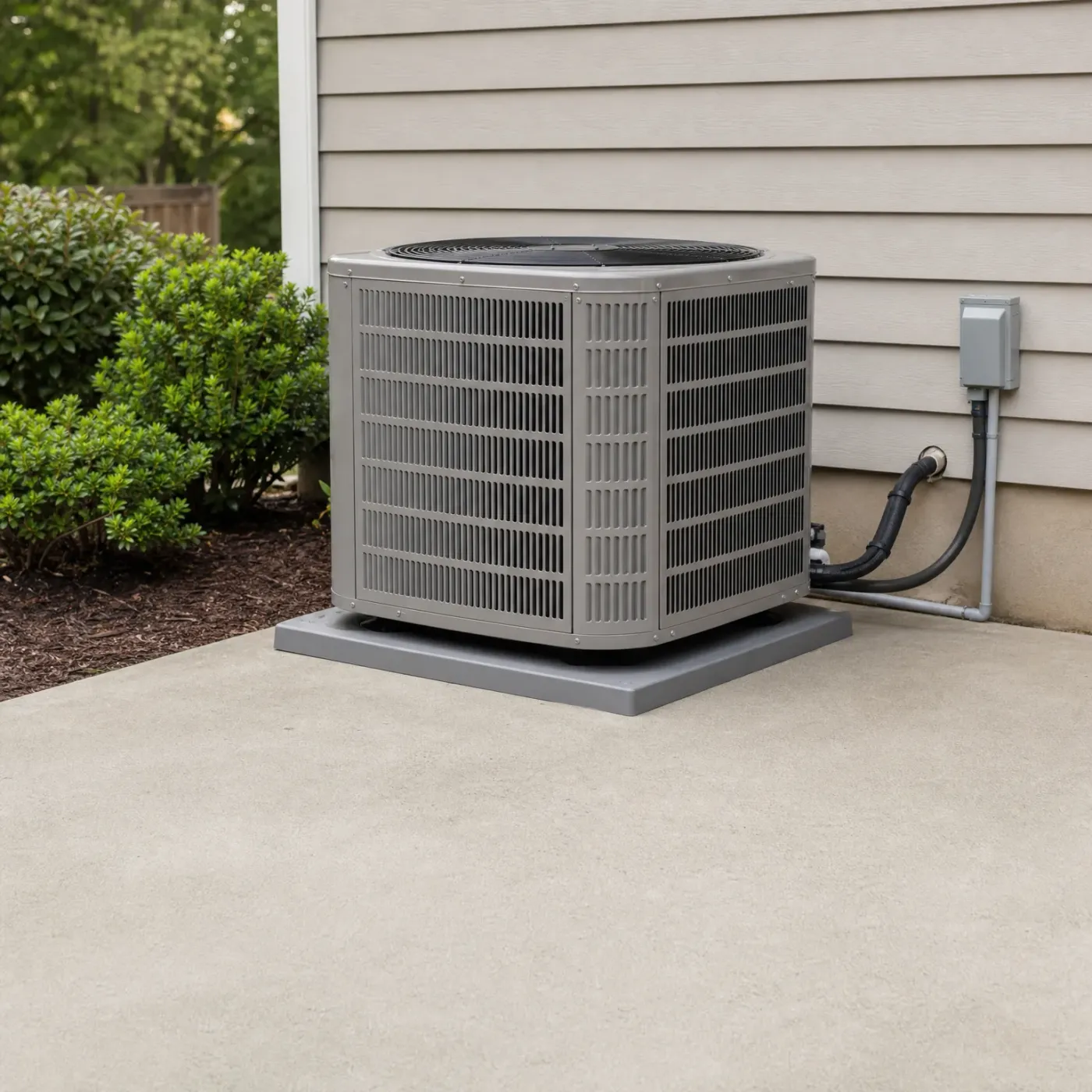
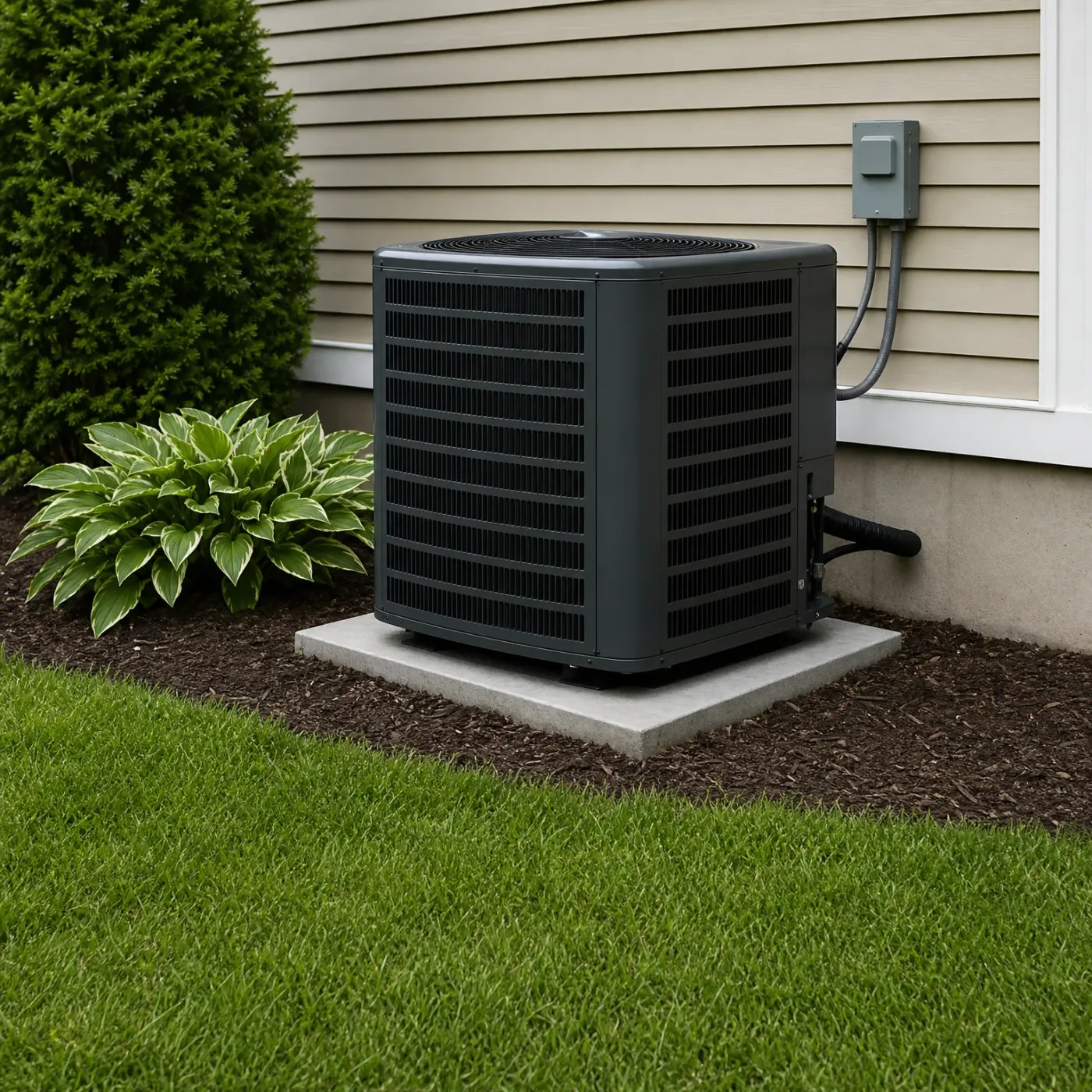
A dark gray outdoor condenser unit on a concrete pad beside a house with beige horizontal siding, with a gray electrical disconnect box and conduit on the wall, mulch beds, a hosta plant, a shrub, and mowed lawn in front.

Running clean

A heat pump that's kept clear of leaves and dirt, with the pad level and the area around it mowed back, moves air the way it was designed to. It doesn't have to strain to pull heat out of the air in winter or push it outside in summer, so it holds up closer to the long end of its life.
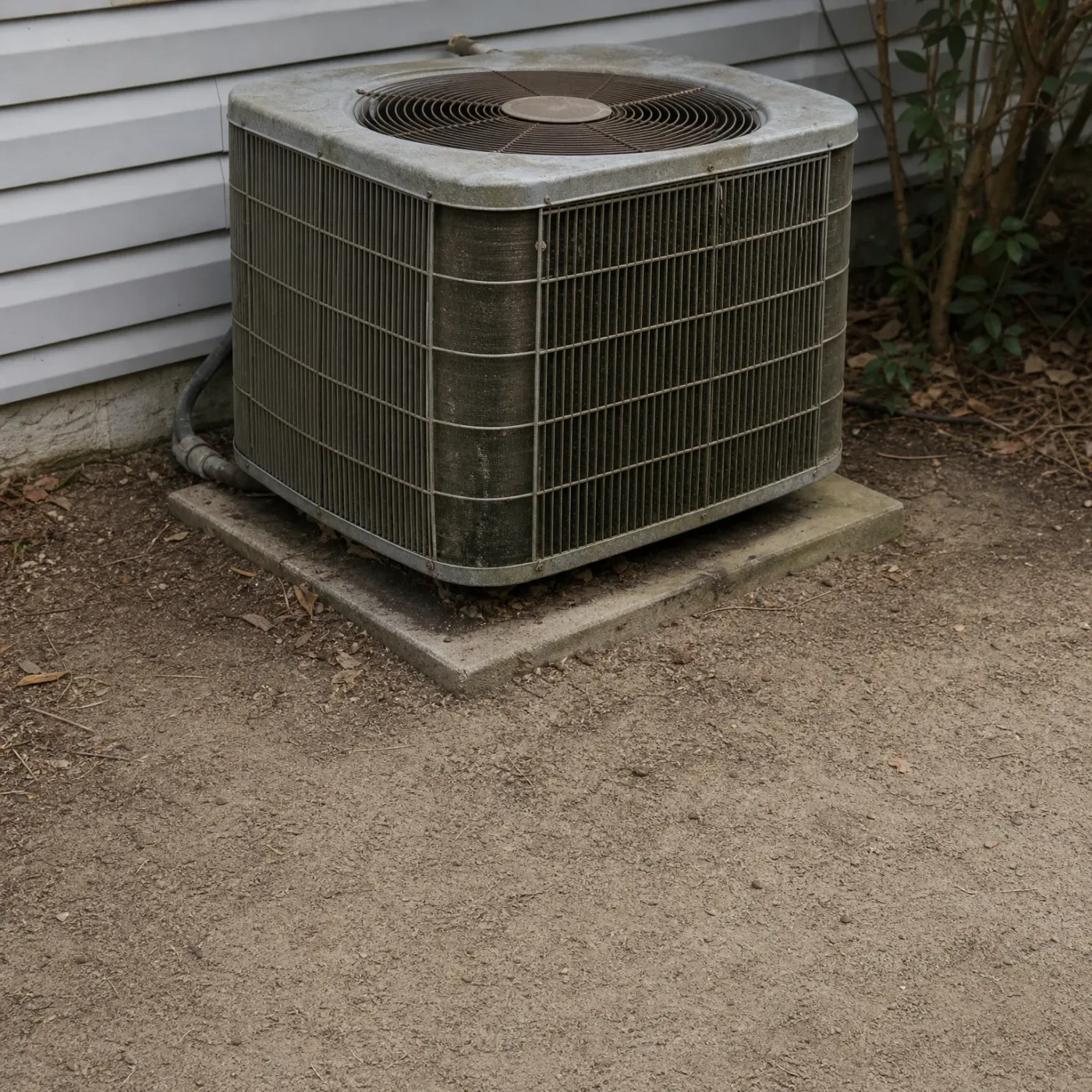

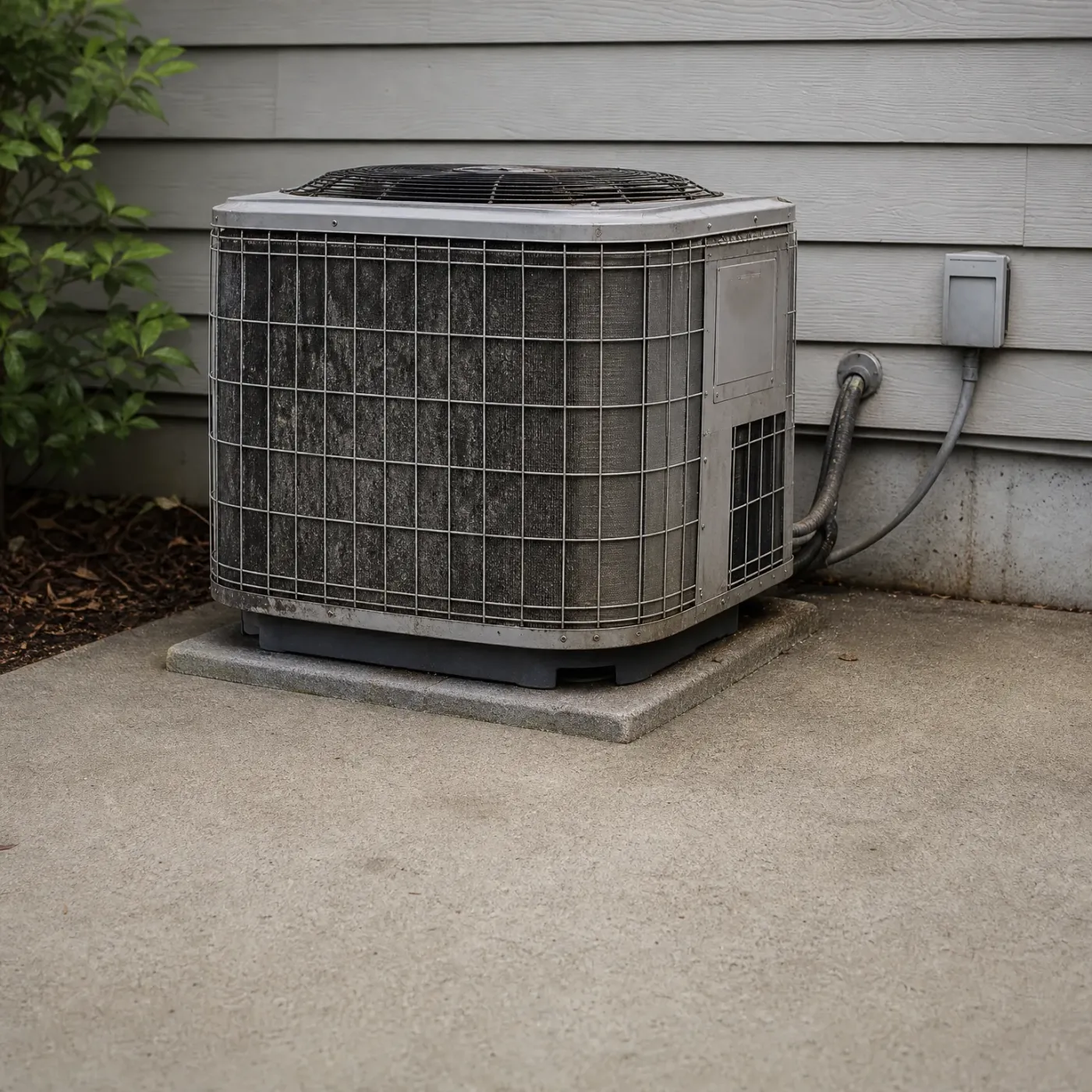
A weathered outdoor condenser unit on a concrete pad beside a house with light horizontal siding, surrounded by bare dirt and a shrub.

Running dirty

Grime caked on the grilles and coil blocks airflow, so the system works harder for the same result. Over years that strain adds up. A unit that's spent its life clogged like this tends to wear out sooner, and it's worth having someone check whether it's still worth fixing or time to replace.

A man in a gray sweater reclines in a brown leather armchair with his eyes closed, beside a wooden side table holding a mug, a folded newspaper and a potted plant, with a bookshelf and sunlit window behind him.
A man with greying hair and a dark sweater leans back on an armchair with his eyes closed and a slight smile, in a living room with a bookshelf, plant, folded newspaper and mug on a wooden table.
A man in a gray fleece jacket sits reclined in a leather chair with his eyes closed, in a room with bookshelves, a table lamp, a window, and a desk holding a folded newspaper and a dark mug.
A bearded man in a gray fleece pullover sits with eyes closed in a brown leather armchair in a living room, with a floor lamp, bookshelf, potted plants, a side table holding newspapers and a dark mug, and a bright window behind him.

A heat pump doesn't burn fuel. It moves heat from one place to another, and a part called the reversing valve decides which direction it moves. In summer that valve pulls heat out of your house. In winter it flips and pulls heat out of the outdoor air to bring inside. That valve switches thousands of times over the years, and when it starts sticking, the unit is usually close to done. The compressor is what wears you'd notice least day to day but matters most. Since your heat pump is running almost every month instead of resting half the year like a furnace does, the compressor logs far more hours. Outside, the coil is catching pollen and whatever's blowing off the trees most of the year, and a coated coil forces the compressor to push harder for the same amount of heat or cooling. When temperatures drop below freezing, the unit has to pause and defrost itself. A system defrosting more than it should is already behind on keeping your house comfortable, and it's a sign the equipment is working harder than it used to.

How a heat pump wears out

  • A heat pump moves heat instead of burning fuel, so the same unit cools your house in July and heats it in January.
  • The reversing valve is what switches it between those two jobs, and most failures that end a heat pump's life trace back to that valve sticking.
  • Running in heat mode all winter puts more hours on the compressor than a furnace ever sees, since a furnace only fires in short bursts.
  • Outdoor coils in Tennessee collect pollen and cottonwood fluff for most of the year, and a dirty coil makes the compressor work harder to move the same amount of heat.
  • Below freezing, the outdoor unit goes into defrost cycles to melt ice off the coil, and a system that defrosts too often is already losing ground.
  • Because the compressor runs nearly year round here, the wear it takes in one Tennessee summer can equal what a milder climate puts on it in two.
An outdoor air conditioner condenser unit on a gray composite pad beside a house with horizontal lap siding, with refrigerant lines and a conduit running to a wall-mounted disconnect box, and a shrub at left.
Before you get your heat pump installation
A gray outdoor condenser unit on a raised pad beside a house with horizontal lap siding, with refrigerant lines, conduit and an electrical disconnect box on the wall, and shrubs on a mulch bed to the left.
After you get your heat pump installation

Why double duty shortens the clock

A furnace in a home that still burns gas for heat only runs a few months a year. Your heat pump doesn't get that break. Since most Tennessee homes run the heat pump itself for winter heat, not just summer cooling, the compressor is cycling on cold mornings in January and hot afternoons in July. More run hours wear the same parts faster, which is the main reason a heat pump's working life lands below what a gas furnace sees, even though both might carry a similar number on paper when new.

What the compressor is carrying

The compressor is the part doing that work, and it's also the most expensive part to replace. It runs anytime the system is heating or cooling, which in a Tennessee home with electric heat means most days of the year carry some load on it. A unit that's never been short on refrigerant or starved for airflow puts less strain on that compressor over the years than one that's been running low or dirty, and that difference shows up in how many years you actually get before it's the compressor that fails.

A gray-haired man with a beard in a blue button-placket shirt reclines on a couch with his eyes closed, beside a sunlit window with a green plant.
A woman in a cream knit sweater sits in an armchair with her eyes closed near a window showing yellow autumn foliage, with a mug on a round wooden side table beside her.
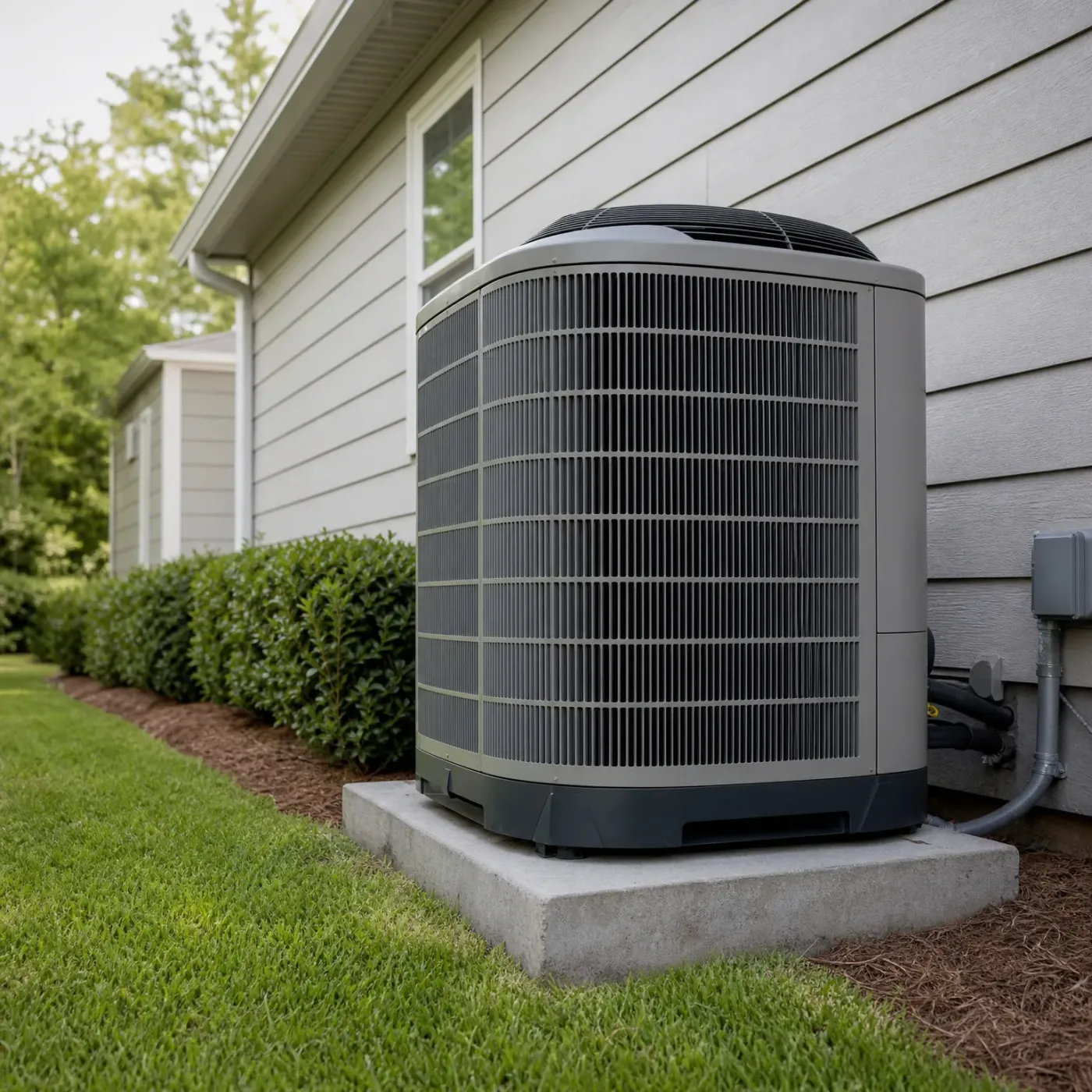
An outdoor condenser unit on a concrete pad beside a light-colored lap-sided house, with a trimmed hedge, mulch bed and mowed lawn nearby and an electrical box and conduit on the wall.

Finding a pro stops being your job

One form replaces the calls you'd make to find a heat pump pro.

One request ends the search for a heat pump installer.

Skip the calls

No charge to send it. You decide if you hire them.

Is your heat pump showing its age right now

Walk past the outdoor unit and listen. A hum that used to be quiet now has a rattle or a click in it. Inside, the air coming out of the vents feels lukewarm instead of warm, or the system runs long stretches without the house actually warming up. You might notice the electric bill creeping up each month even though you haven't changed the thermostat. Ice building up on the outdoor coil in winter, water pooling near the indoor unit, or a short cycle that kicks the system on and off every few minutes are all signs the unit is working harder than it should. Left alone through another Tennessee summer and winter, a heat pump in this shape usually fails at the worst possible time, not a convenient one.

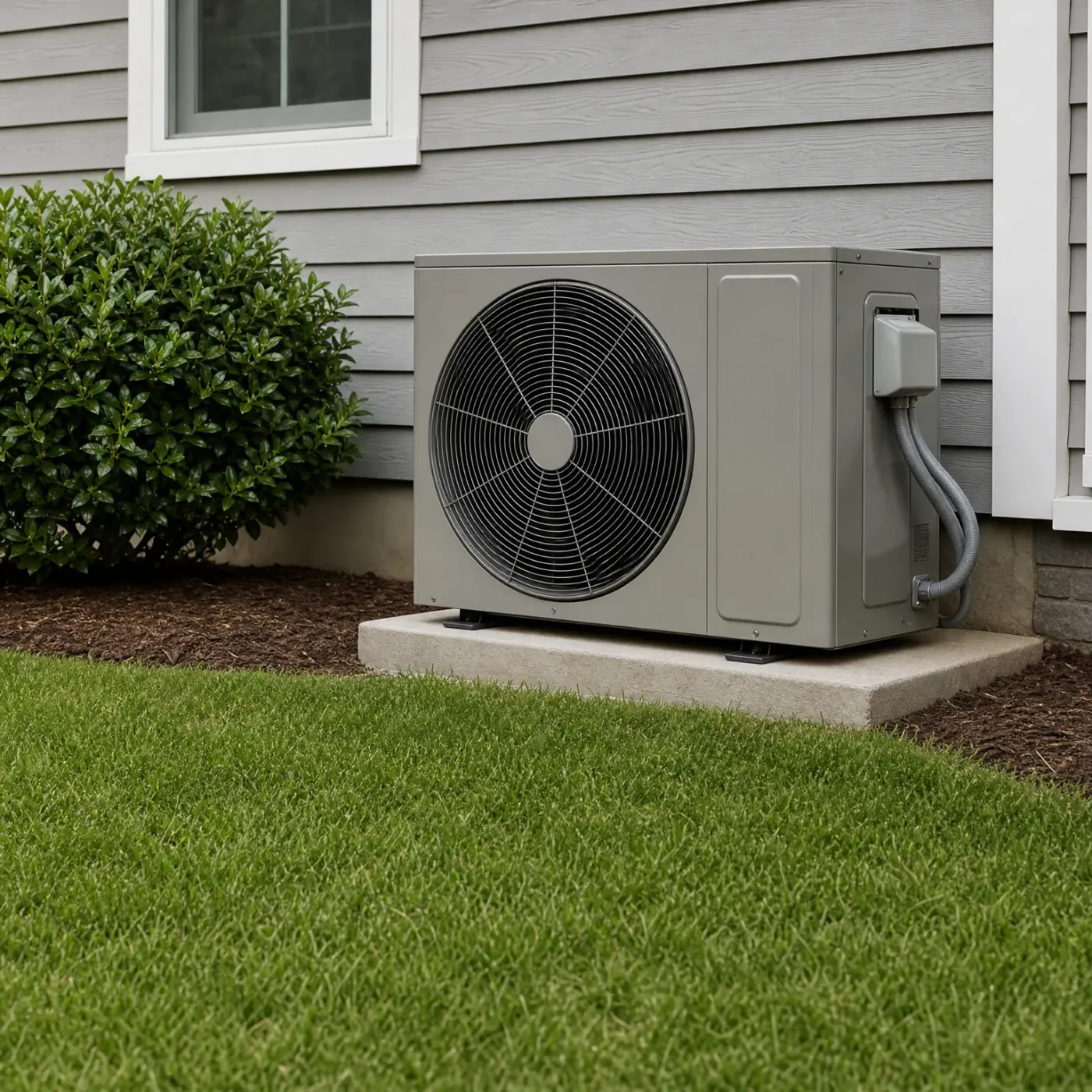
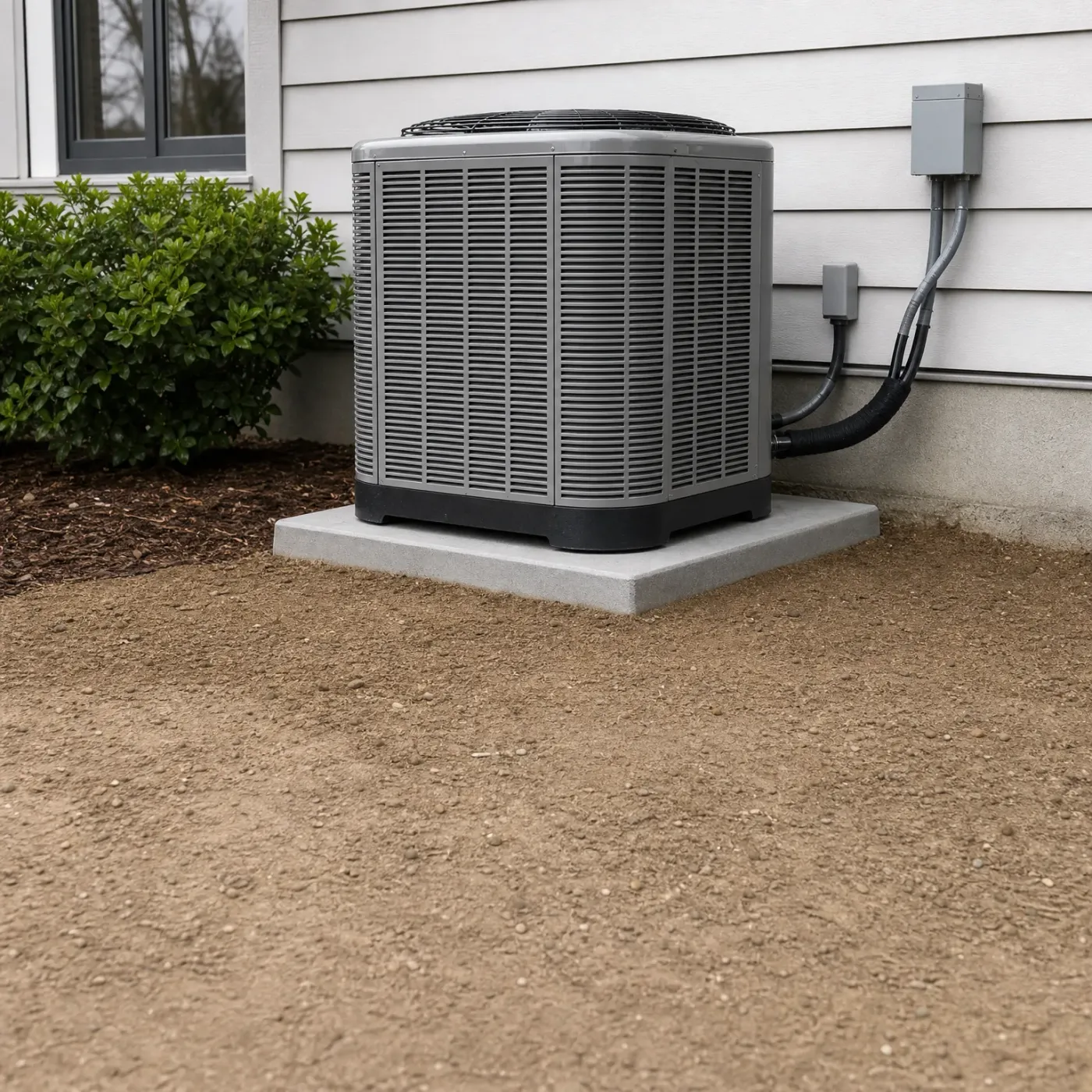
A gray outdoor heat pump unit with a large fan grille sits on a concrete pad beside a house with horizontal lap siding, next to a green shrub, mulch bed, and lawn.

Working the way it should

This unit sits clean on its pad, the mulch bed and shrub trimmed back and the conduit running neat along the wall. Air moves through it with no resistance. In muggy Tennessee summers and through the winter months, it isn't fighting anything to do its job.

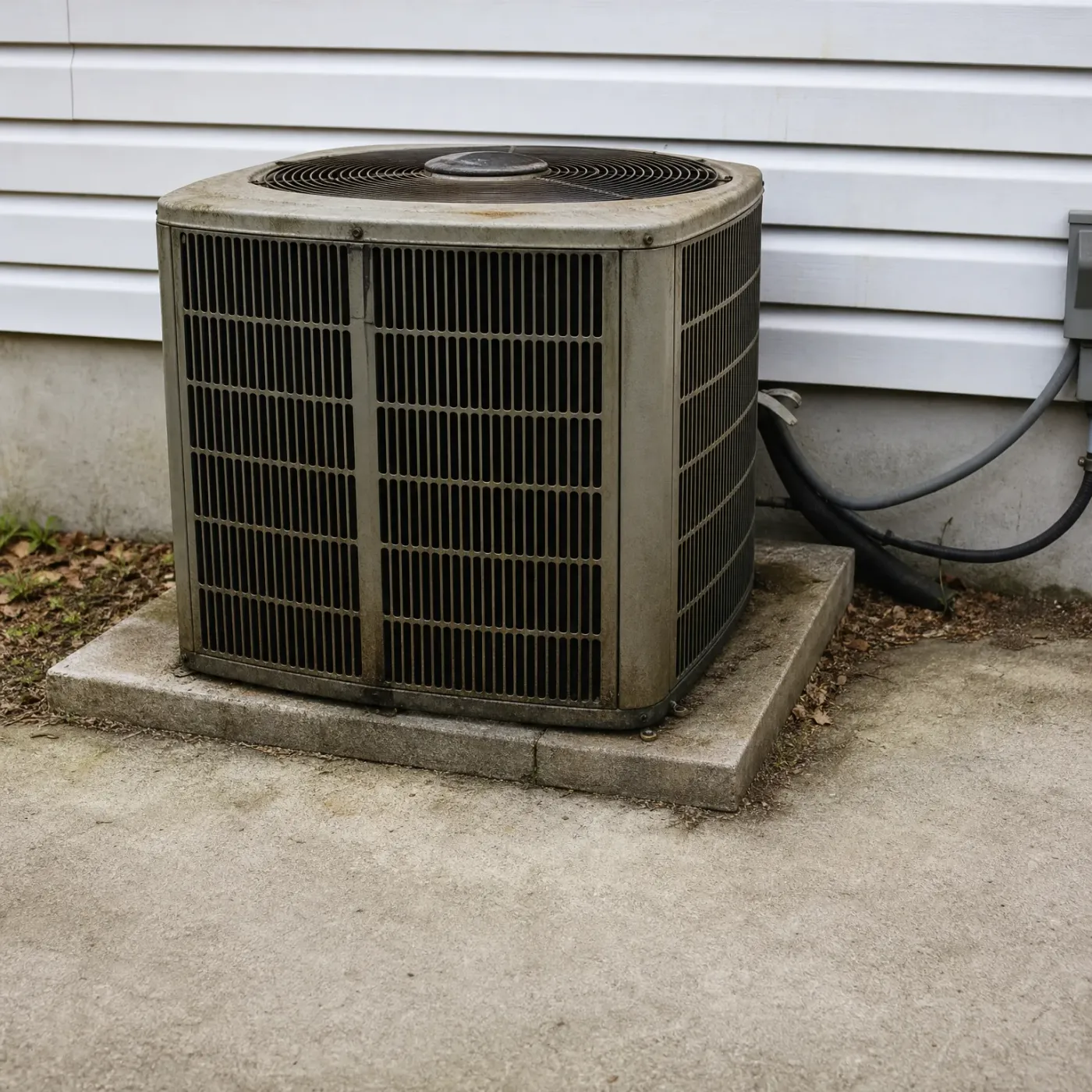
A weathered outdoor condenser unit on a concrete pad beside a house with white horizontal vinyl siding, with refrigerant lines and conduit running to a wall-mounted electrical box.

Carrying too much weather

Grime has built up across the grilles here, and the cabinet shows what years outside do to metal. The refrigerant lines still run into the wall, but a unit weathered like this is working harder to move the same air it used to move without trying.

Repair it or replace it now

Keep repairing

  • If the unit is still under ten years old, a repair bill under a few hundred dollars usually makes more sense than replacing the whole system.
  • A single failed part, like a capacitor or a contactor, doesn't mean the rest of the unit is going with it.
  • You avoid the upfront cost of a new install and the work of picking a new system and a new size for your house.
  • If the compressor and reversing valve are still sound, the rest of the repairs tend to be smaller and cheaper.
  • Staying with the current unit means no gap in heating or cooling while a new system gets ordered and scheduled.

Replace now

  • A heat pump working double duty through Tennessee summers and winters puts more hours on it than a system that only runs half the year.
  • If the compressor or the reversing valve has failed, that repair often costs close to what a new unit would.
  • A newer heat pump holds a steadier temperature and doesn't run as long to get there, which matters with electric heat already carrying the winter load.
  • Repeated repairs on the same unit in one year are a sign the rest of it isn't far behind.
  • Replacing now means you choose the timing, instead of waiting for a breakdown on the coldest or stickiest day of the year.
  1. Refrigerant absorbs heat from outside air through the coil

  2. Compressor squeezes the refrigerant, raising its temperature

  3. Reversing valve decides which coil releases heat indoors

  4. Indoor coil gives up that heat to the air

A gray outdoor condenser unit on a concrete pad beside a white horizontal-siding house, with refrigerant lines and conduit running to a wall-mounted disconnect box, bare soil in front and a green shrub at left.
The fins and grille are clear, so the unit pulls in air without fighting through dust first.
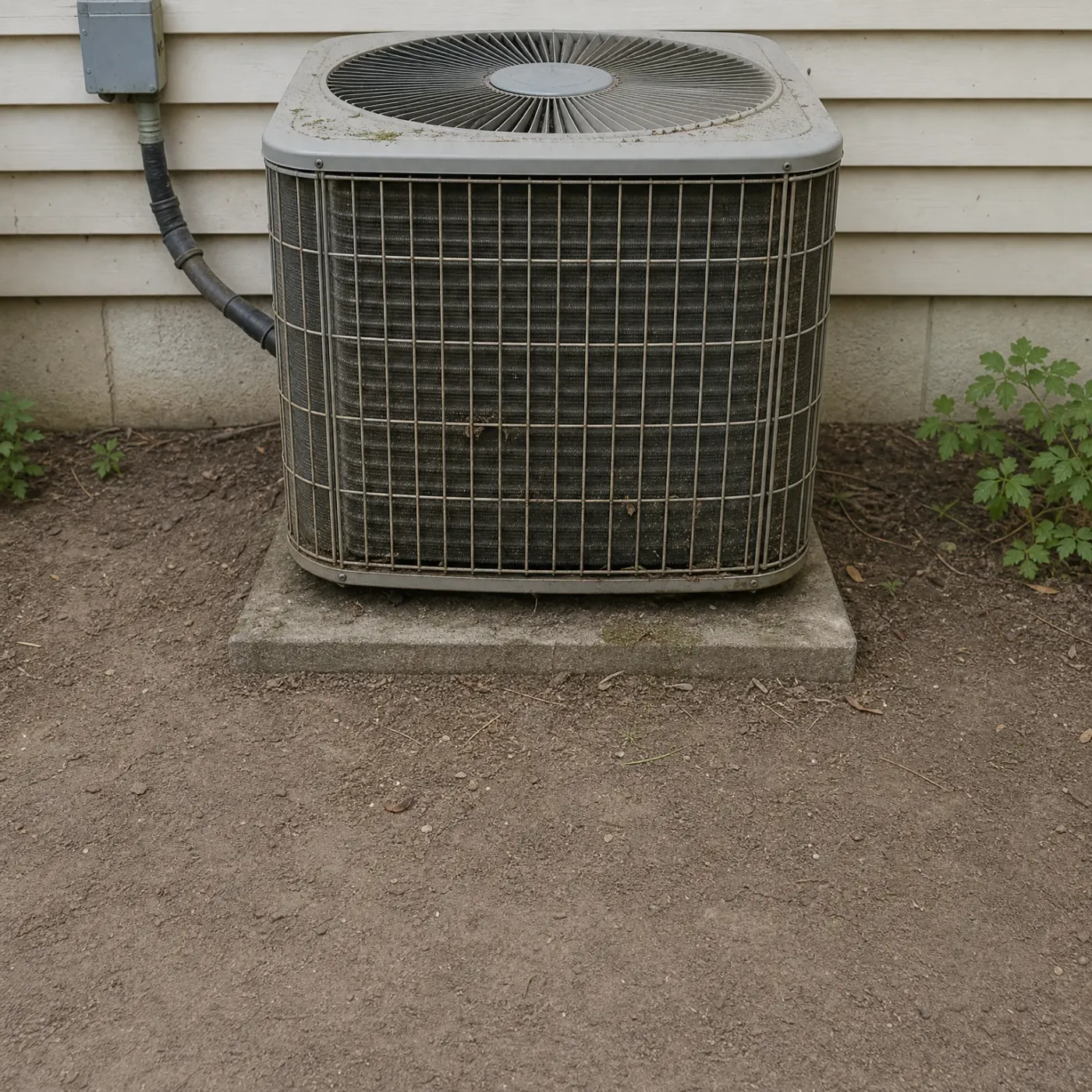
An outdoor air conditioning condenser unit on a concrete pad beside a house with light horizontal siding and a concrete block foundation, with bare soil and small green plants around it.
Dust packed into the fins makes the unit work harder to move the same air, in July heat or January cold.
A single-story red brick building with a hipped shingle roof and several white-framed windows, fronted by a large empty asphalt lot with sun flare, surrounded by green trees under a bright hazy sky.

The National Weather Service puts the average summer dew point across Tennessee at 66°F, and that's the number that tells you how heavy the air feels, not the temperature on the thermometer. At that dew point, your heat pump has to pull a lot of moisture out of the air before the house feels cool, not just drop the temperature. That's extra work the compressor does every summer day here, on top of cooling the air itself. You'll notice it as longer run times and a unit that cycles on more often than the forecast high alone would suggest. Over years of summers like that, it's part of what wears a heat pump down faster than one running in a drier climate.

NASA POWER T2MDEW county cells weighted by homes

A closed silver laptop and a glazed ceramic mug on a wooden table, with a blurred kitchen counter, potted plant, cutting board and window in the background.

What an aging heat pump costs you at home

You'll feel it before you can prove it. The thermostat says 70 but the air out of the vent isn't quite warm, so you nudge it to 72, then 74. Multiply that by every room, every month, and your electric bill carries the difference since power here runs the heat as well as the AC. Humidity is the other tell. If the house feels damp in August even with the unit running, it's losing the fight to pull moisture out of sticky Tennessee air, and that's extra load on a system already working past its years.

None of that means you have to spend your evenings calling around, getting put on hold, or explaining the same rattle and lukewarm air to three different companies so you can compare what they quote. Send one form and that search is off your plate. A licensed contractor who installs heat pumps for a living takes it from there, and you go back to deciding what temperature you actually want the house at.

Interior corner of a dining room with a round wooden table, a ceramic vase holding olive branches, a dark spindle-back chair near a curtained window, and a sideboard with a lamp against beige walls.

Power costs 13.22 cents per kilowatt-hour statewide

At 13.22 cents a kilowatt-hour, you're paying less than most of the country to run that heat pump. But a unit on its last legs still eats more power to do the same job, so an aging system can erase that advantage on your bill.

EIA-861 2025 statewide residential average

A heat pump in Tennessee runs somewhere around ten to fifteen years, less if it's been skipping maintenance or straining through both muggy summers and cold winters without a break. Past that point, a unit that's limping along is costing you more than it looks like on paper, between the power it burns and the repairs that keep stacking up. You don't have to work out on your own whether yours is worth fixing again or replacing. Instead of searching through contractors, calling a few, explaining the same rattle or the same warm-but-not-warm air to each one, then sitting with quotes trying to tell them apart, you can send one form and let that legwork become someone else's job. Once it's sent, you're not the one tracking down help anymore. You'll know where you stand with your own system, and you won't be the one doing the chasing to get it looked at.

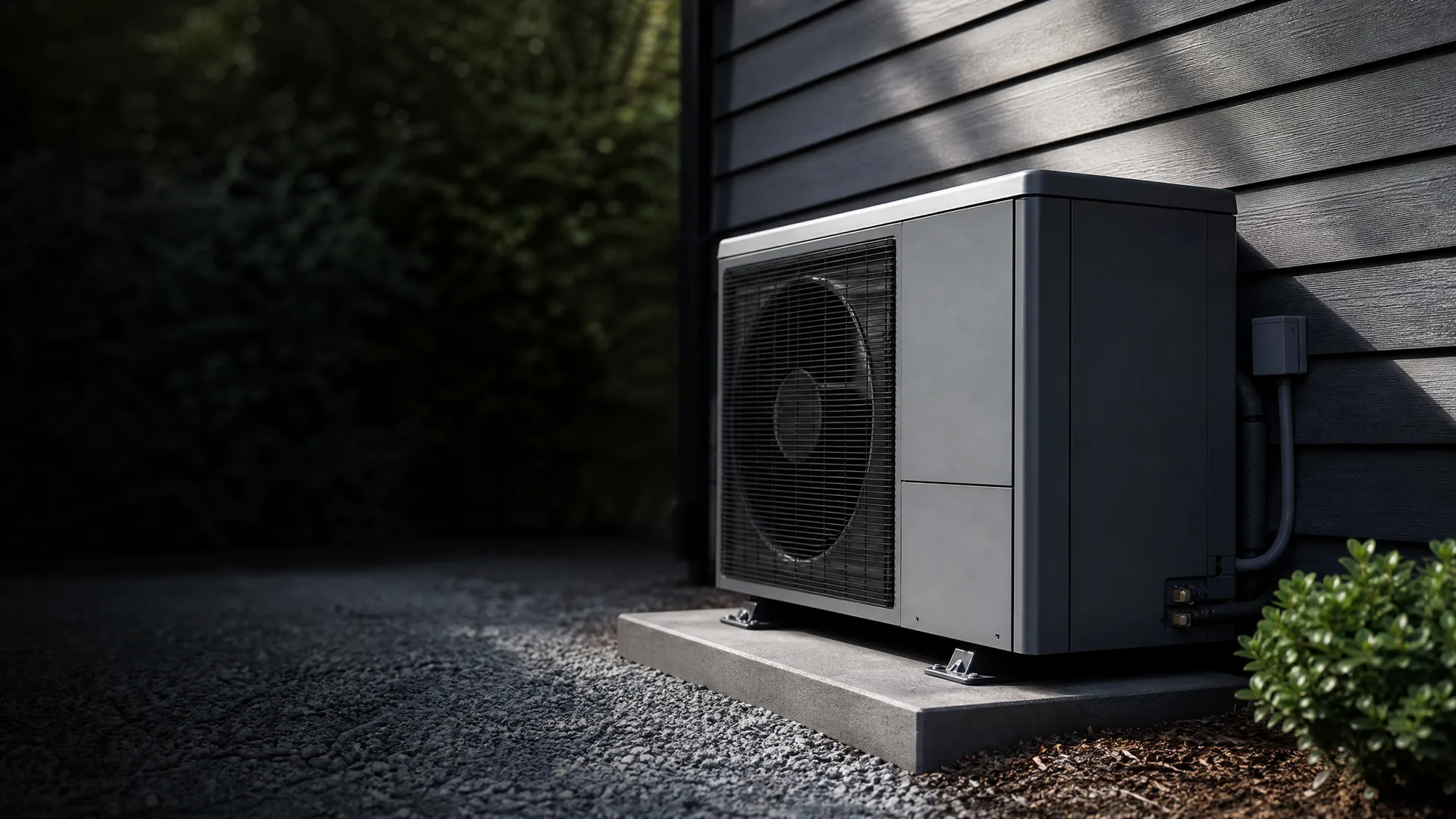
A gray outdoor heat pump unit mounted on a concrete pad beside a dark horizontal-slat clad house wall, with gravel ground and shrubs nearby.

Let someone else find the pro

Step 1 of 3: Equipment