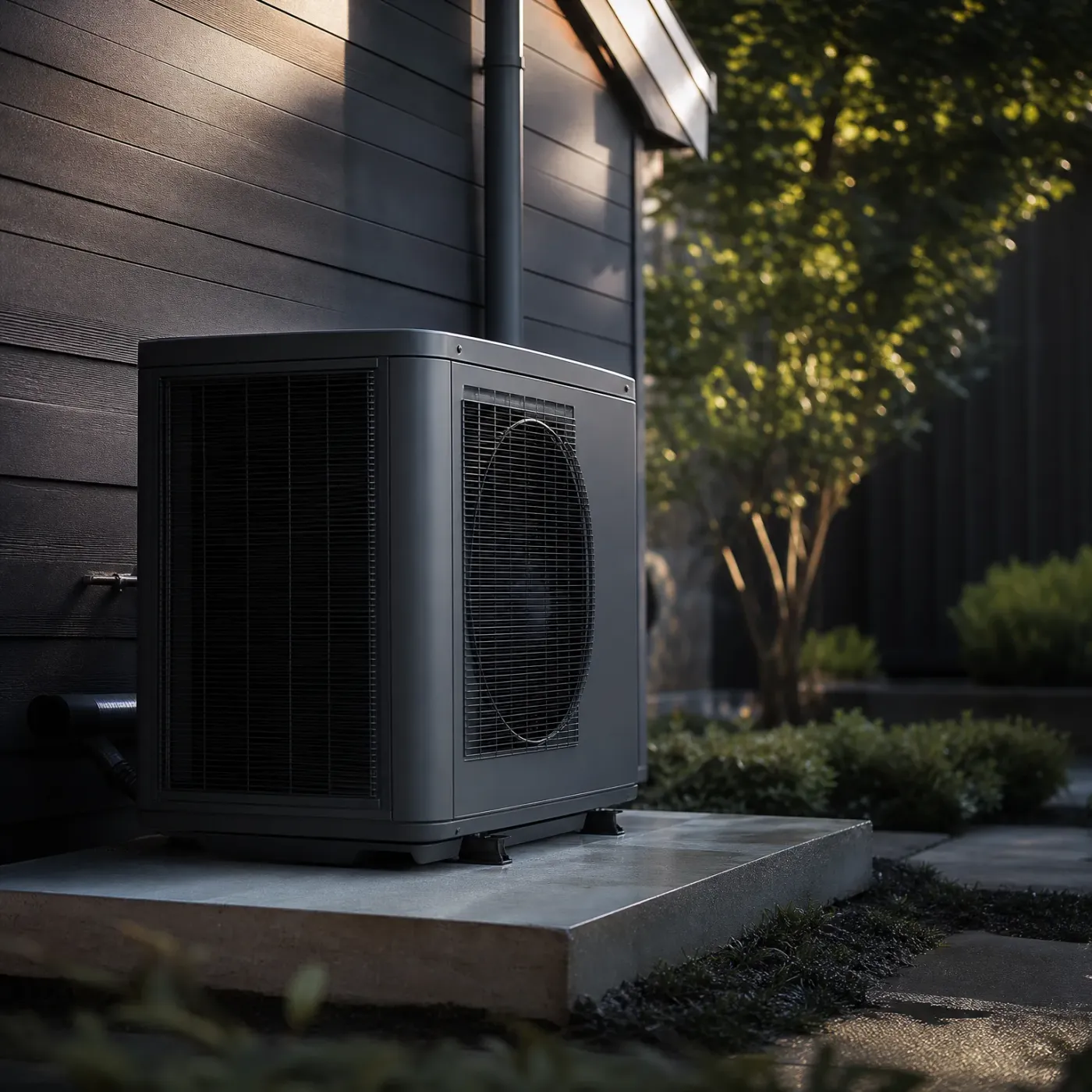




A gray outdoor condenser/heat pump unit with a side fan grille sits on a concrete pad beside a dark horizontal wood-sided house, with shrubs and a small tree nearby.

Matched to your heat pump job

Why your heat pump makes noise in a Tennessee winter

Your heat pump clicks, hums, or rattles when it kicks on in cold weather, and you want to know if that's normal or if something's wrong. Below is what's behind the noise and when it means a problem. If it sounds like trouble, you can get matched with a contractor who can take a look.

Find a pro near me

A clicking or humming sound when your heat pump starts up is usually just the reversing valve switching the system from heating to defrost and back. Tennessee winters put heat pumps into defrost often, because the outdoor coil picks up frost anytime it's cold and humid outside, and the unit has to pause, reverse itself, and melt that frost off before it can keep warming the house. That reversing valve makes a clunk or a whoosh when it shifts, and the outdoor fan slowing down or stopping adds a hum or a change in pitch. None of that is a problem. What should get your attention is a grinding, screeching, or banging sound, or a noise that shows up with weak heat or a system that won't stop running. That points to a worn motor bearing, a loose part, or a compressor under strain, and it's worth having someone look at before it leaves you without heat on a cold night.

A woman with long wavy brown hair in a grey ribbed sweater sits on a couch indoors, looking toward a window, with a potted palm-like plant and fireplace behind her.
A woman with long brown hair wearing a green V-neck top and beige cardigan sits on a light sofa, looking off to the side, with a dining table, lamp and framed picture in the background.
A woman with long dark hair in a cream knit sweater sits on a beige sofa indoors, looking toward a bright window with a houseplant and framed picture in the background.
A woman with long dark hair in a green knit sweater sits on a couch indoors, smiling and looking toward a window with a blurred room behind her.

Normal Sound or a Problem

Normal Noise

  • A rhythmic clicking at startup and shutdown is the reversing valve switching direction, not a sign of wear.
  • A steady hum while the outdoor unit runs is the compressor and fan motor working, the same as any running appliance.
  • A whooshing sound for ten or fifteen minutes is defrost mode, and it should stop once the coil clears.
  • Air moving through the vents sounds different in winter because heat pump air comes out cooler than a furnace's, even when the system is working right.

Needs a Look

  • A squeal or screech from the outdoor unit points to a worn fan motor bearing, and it won't go away on its own.
  • Loud banging or a metallic clatter means a part has come loose inside the cabinet, possibly the fan blade hitting something.
  • Buzzing that continues after startup, rather than just at the switch, can mean an electrical connection is loose.
  • If the unit runs in defrost longer than fifteen or twenty minutes or cycles into it too often, something in the defrost control may be off.
  • A grinding noise from the outdoor fan usually means the motor itself is failing.
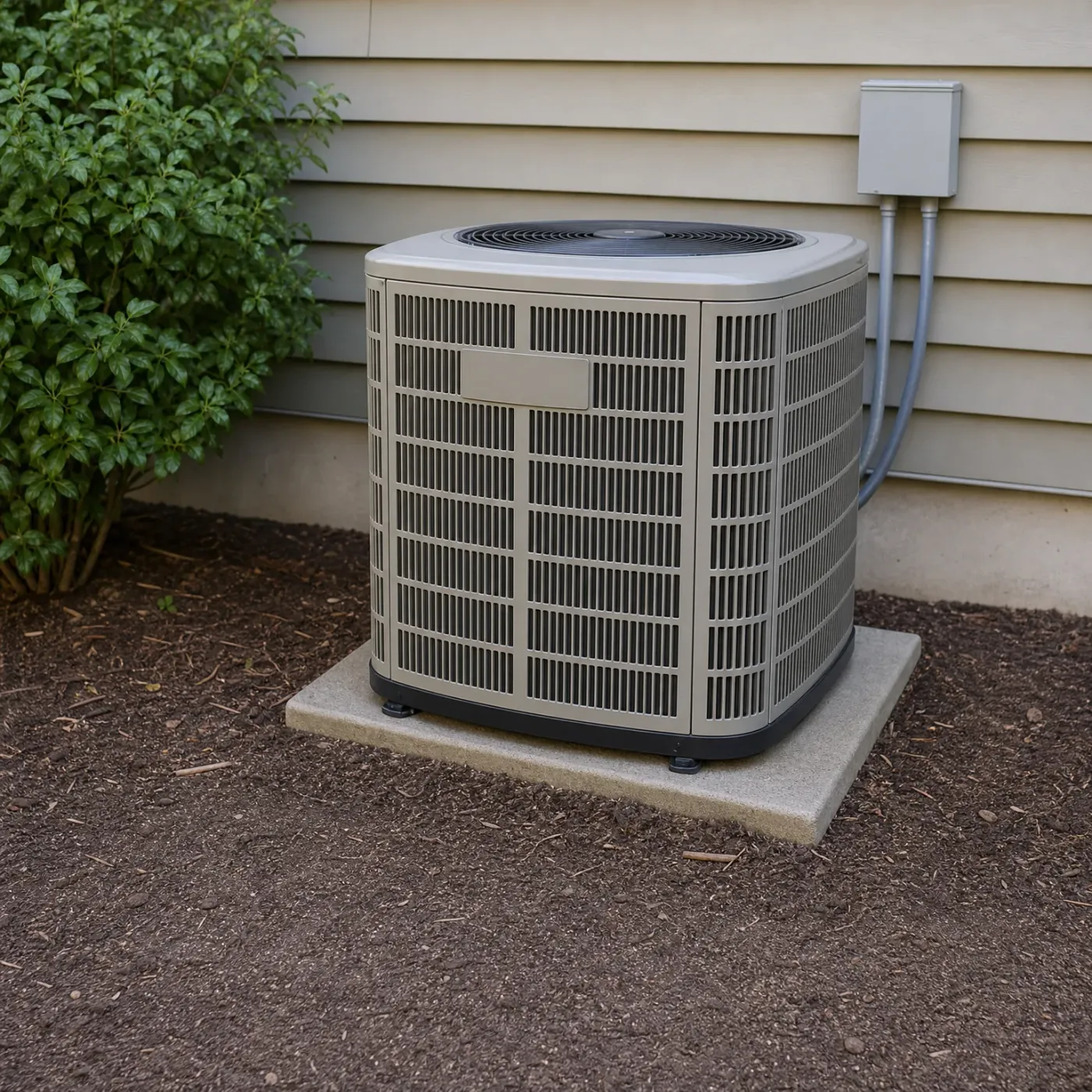
A beige outdoor air conditioning condenser unit on a concrete pad beside a house with horizontal vinyl siding, with refrigerant lines and a disconnect box on the wall, surrounded by dark mulch and a green shrub at left.

Running normally

This is a heat pump doing what it should on a cold morning. The disconnect box on the wall feeds it power, the conduit runs clean, and the fan turns steady. You might hear a hum or an occasional click as the reversing valve switches, but the unit sits quiet otherwise, no rattle, no grinding.
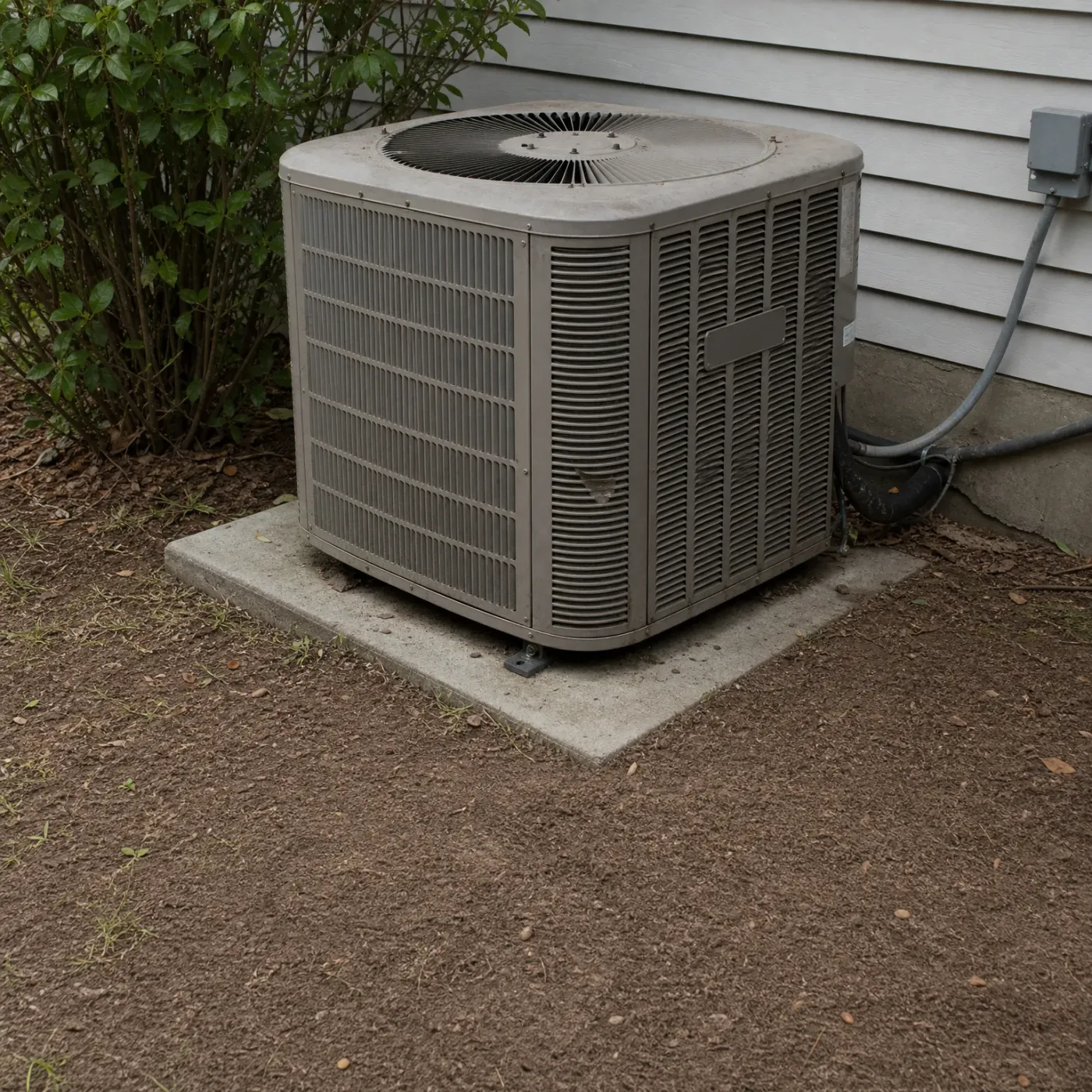
An outdoor air conditioner condenser unit on a concrete pad beside a house with horizontal lap siding, with a shrub to the left, bare dirt in front, and conduit and a metal disconnect box on the wall.

Something's off

Here the unit looks the same on the pad, but the sound coming from it isn't. A grinding, a buzz that won't stop, or banging metal means a part inside is loose, worn, or failing, not the defrost cycle doing its job. That's when it's worth having someone look at what's making the noise.

Is it just the cold, or is something actually wrong?

You're probably hearing this most on the coldest mornings, when the outdoor unit is working hardest to keep the house warm. A click or two at startup and another when it shuts off is the reversing valve, and that's fine. What's worth paying attention to is anything new: a grinding or squealing from the outdoor unit, a rattle that wasn't there last winter, or the system running longer than usual without warming the house. Since most homes here heat with electric heat pumps, a system that's struggling won't just get noisy, it'll lean on backup heat strips to make up the difference, and that shows up on your bill before you notice anything else.

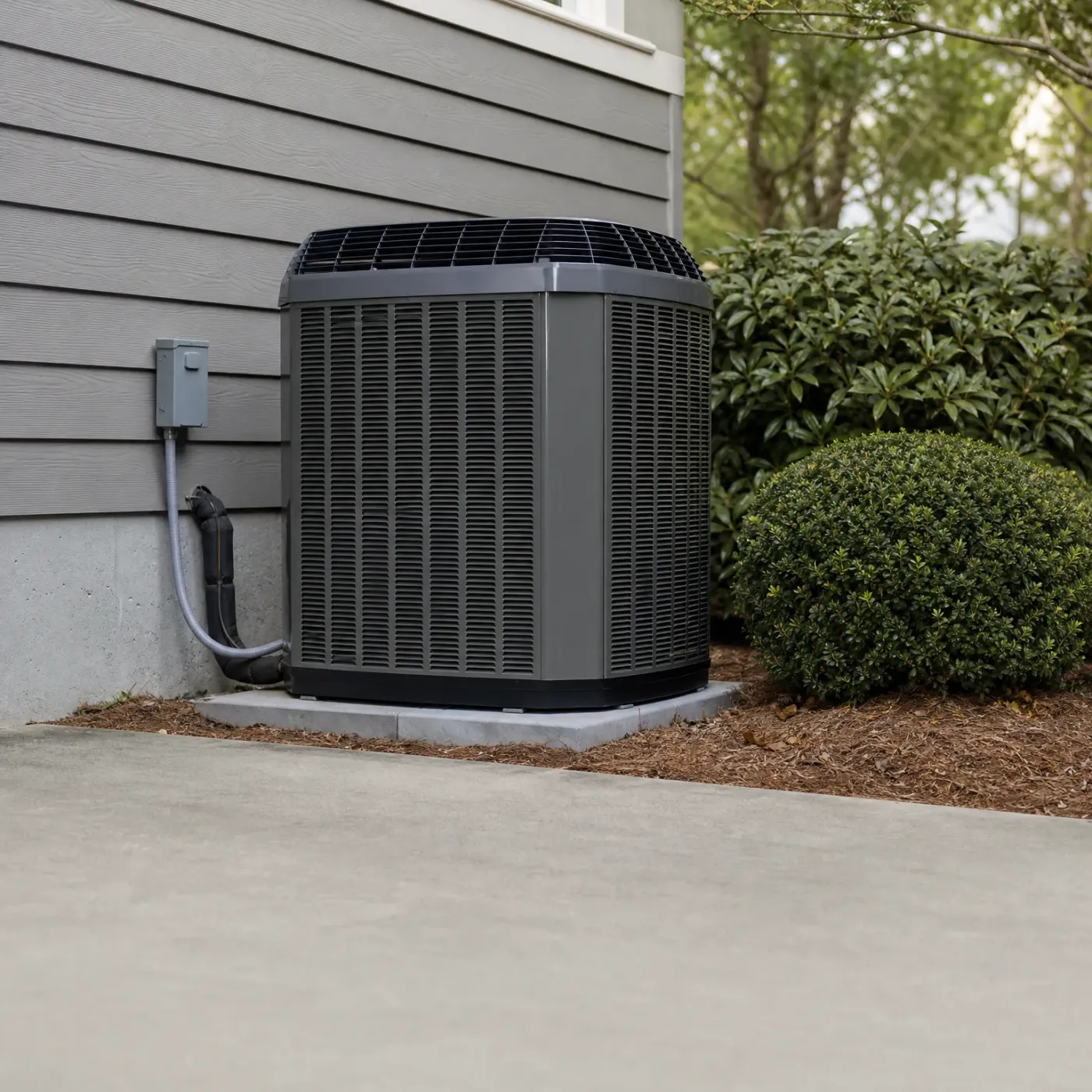
An outdoor condenser unit on a concrete pad beside a gray lap-sided house, with an electrical disconnect box and conduit on the wall and shrubs with mulch to the right.
The coil here is clean and the fan turns without a fight, so the clicks you hear are just the reversing valve doing its job.
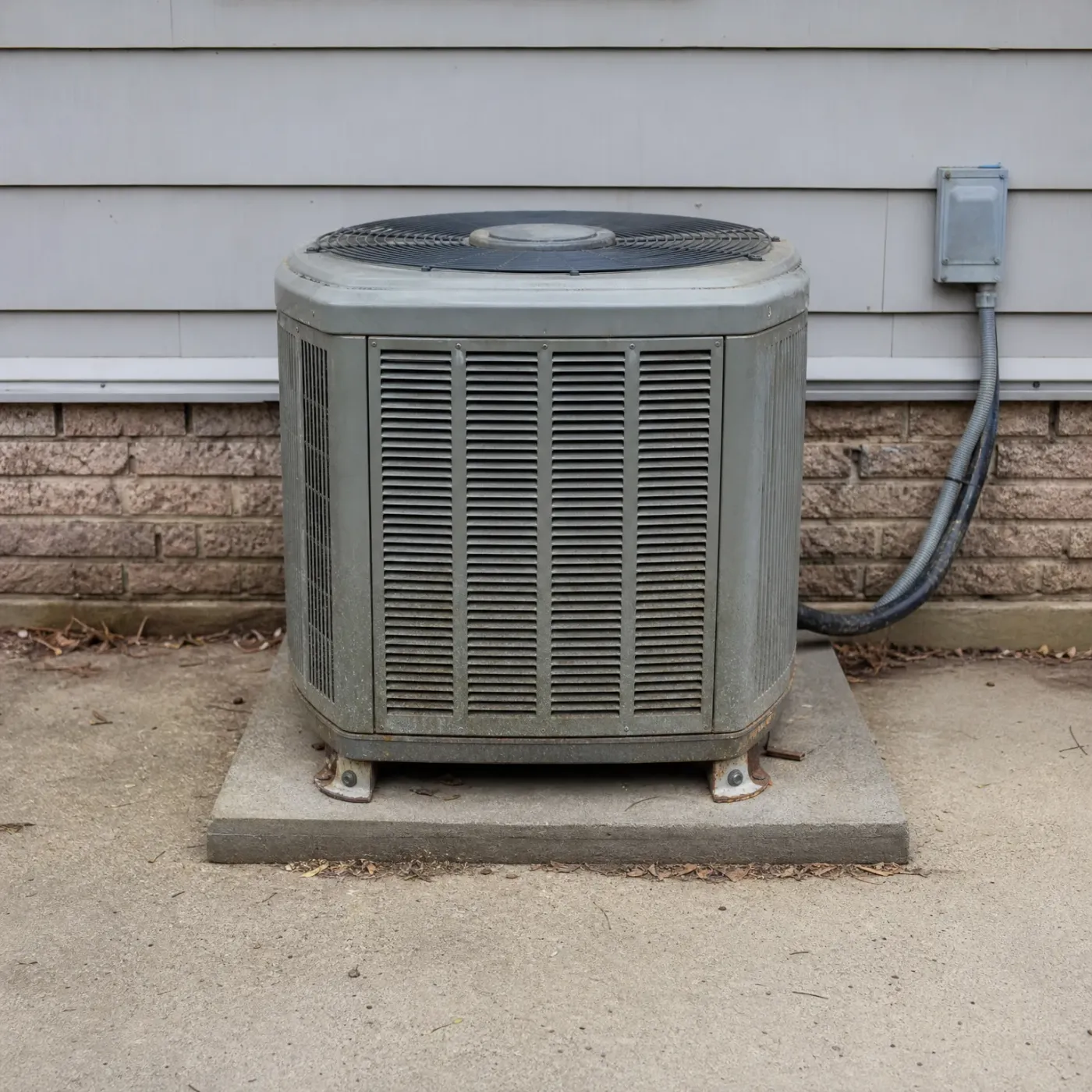
An outdoor air conditioning condenser unit on a concrete pad beside a house with horizontal siding above a brick foundation, with a flexible conduit running to a wall-mounted disconnect box.
Caked dust on the coil and a weathered cabinet make the unit work harder, and a new sound can mean a part is wearing out under that strain.
  1. Outdoor temperature drops and frost starts forming on the outdoor coil

  2. A sensor or defrost timer tells the system frost has built up

  3. The reversing valve shifts and makes that clicking sound you hear

  4. Heat flows backward through the outdoor coil to melt the frost off

An older woman with short gray hair in a cream cable-knit turtleneck sweater smiles while looking to the side in a wooden kitchen, with a round loaf of bread on a board in the foreground and a lit candle by a dark window.
A woman with dark hair in a bun sits wrapped in a chunky knit blanket on a couch with a child resting his head on her shoulder, eyes closed, beside a lit lamp and bookshelf indoors.

A heat pump pro near you

Describe what your heat pump is doing once, in one form.

Sending the form costs nothing.

How the defrost cycle actually runs

  • The defrost cycle runs on a timer or a sensor, not on how cold it feels to you standing inside.
  • During defrost the outdoor fan stops turning while the coil clears, so you may hear the fan cut out and the sound of the unit change.
  • A backup heat strip or your furnace often kicks in during defrost to cover the brief drop in warm air.
  • The clicking you hear at the start and end of defrost is the reversing valve's slide changing position inside the valve body.
  • Short defrost cycles that end within several minutes are the system working as designed, not a fault.
  • A defrost cycle that runs long or repeats close together points to a frozen coil or a sensor that isn't reading frost correctly.

A heat pump decides on its own when to defrost. A control board reads a sensor on the outdoor coil, or runs a fixed timer, and starts the cycle when it detects enough frost buildup, whether or not the morning feels brutally cold to you. Once it starts, the system briefly reverses itself and sends heat outside to melt the frost off the coil. The outdoor fan shuts off during this part, so if you're standing near the unit you'll notice it go quiet, then the whole sound of it changes as the cycle runs. Inside the house, that reversal means the air coming out of your vents isn't warm for a few minutes. Most systems cover that gap by switching on a backup heat strip, or your furnace if you have a dual fuel setup, so the house doesn't go cold while the outdoor coil clears. The clicking you hear at both ends of this, startup and shutoff, is the reversing valve's slide moving inside the valve body to redirect refrigerant flow. A normal defrost cycle is short. It clears the coil and switches back within several minutes, and the system returns to heating like nothing happened. What's worth paying attention to is a cycle that drags on much longer than that, or one that starts again shortly after the last one ended. That pattern usually means the coil is staying frozen longer than it should, or the sensor reading frost isn't doing its job, and it's worth having someone look at it.

Power costs 13.22 cents per kilowatt-hour statewide

Most houses in Tennessee heat with electricity, and at 13.22 cents a kilowatt-hour your heat pump is already running most of the winter day to keep the house warm. That defrost clicking adds a little more runtime on top of it, so a unit that's straining or short-cycling shows up on the bill before you ever see it fail outright.

EIA-861 2025 statewide residential average

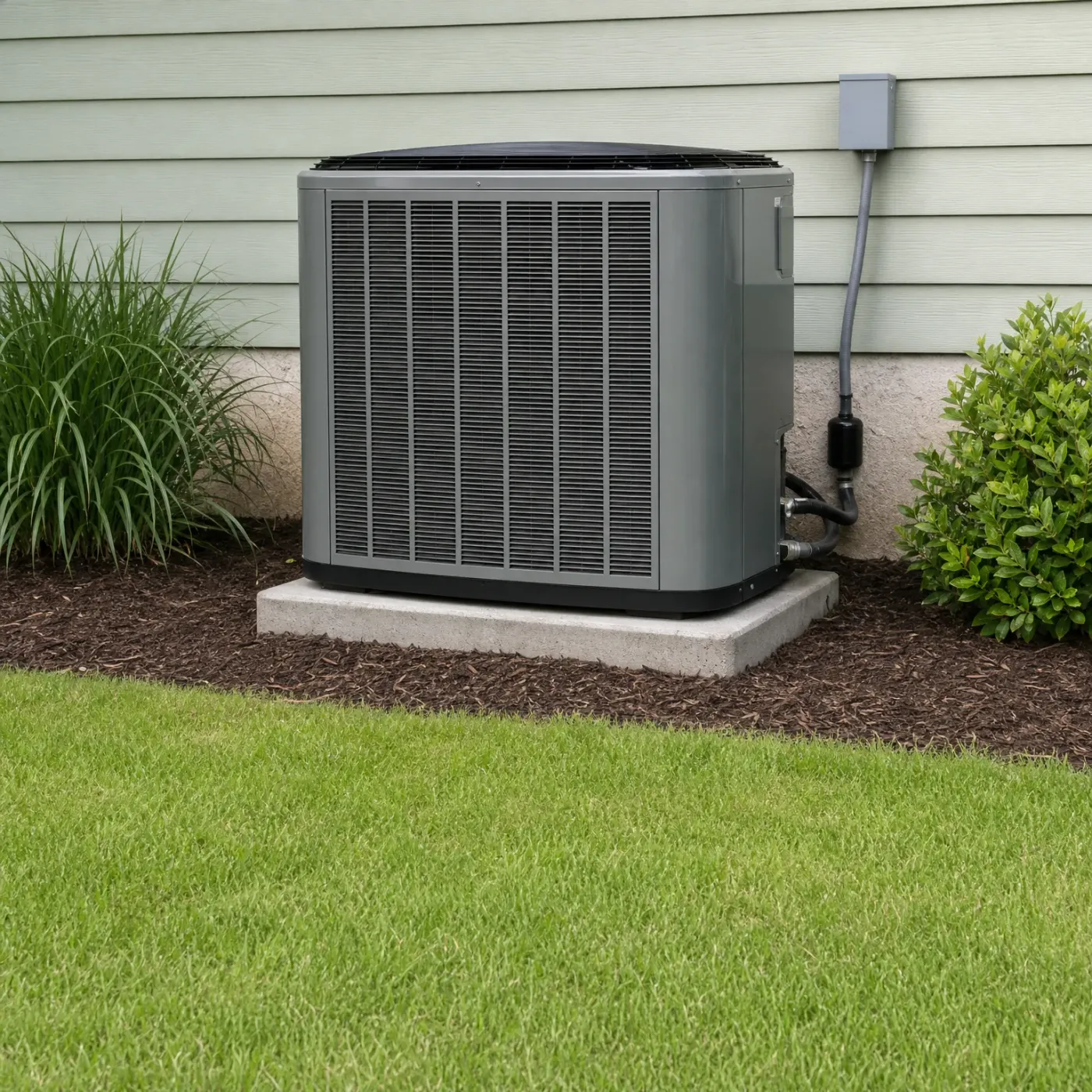
A gray outdoor condenser unit on a concrete pad beside a light-green sided house, surrounded by mulch, ornamental grasses and a shrub, with mowed lawn in the foreground.

Clean coil, steady fan

The coil fins are clear and the fan spins freely, so cold air moves across it the way it should. The unit cycles into defrost, clicks once or twice, and gets back to heating. Nothing here is fighting for airflow.

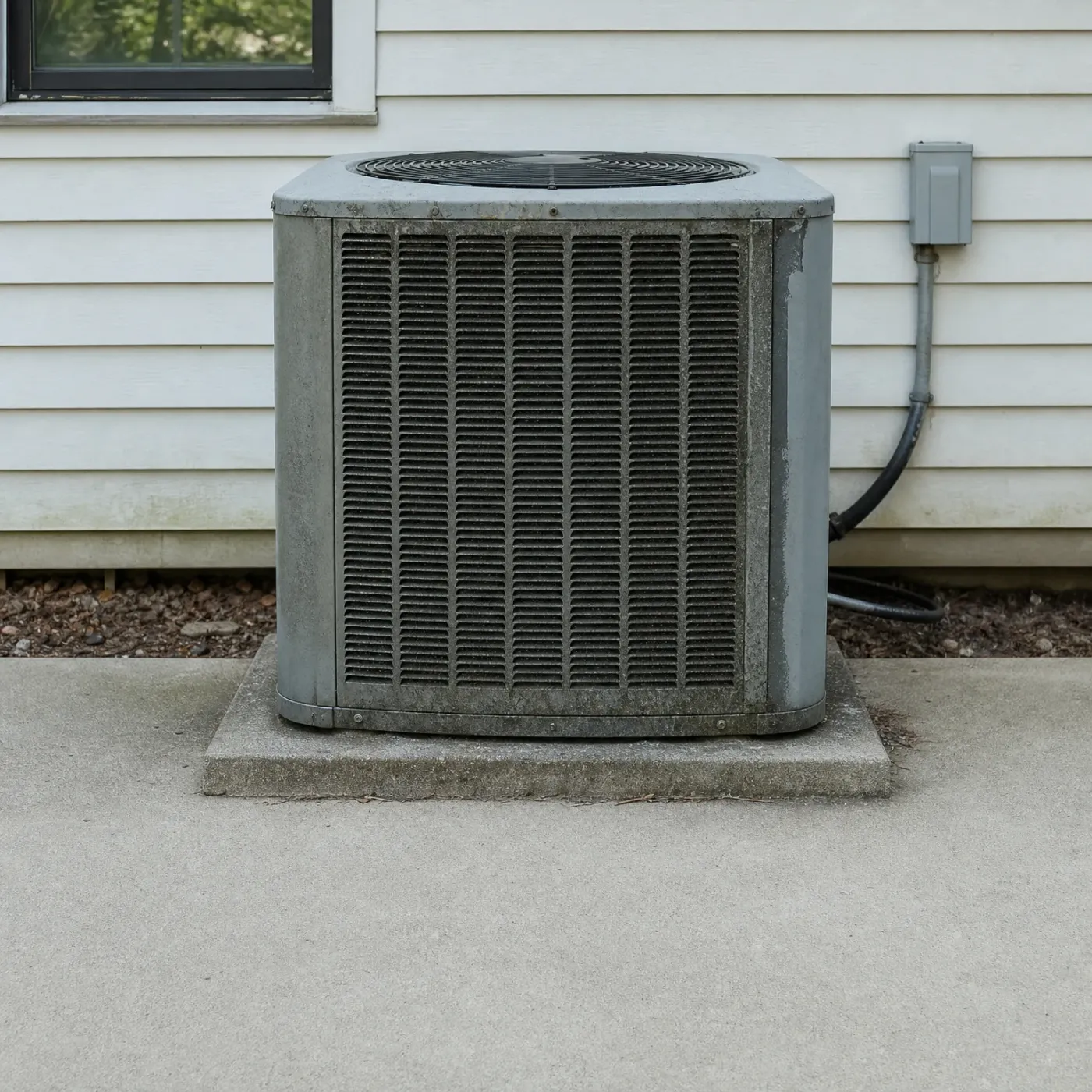
A gray outdoor air conditioning condenser unit on a concrete pad beside a house with light vinyl siding, with a gray electrical disconnect box and conduit on the wall to the right.

Dirty coil, weathered cabinet

Grime packed into the fins and a cabinet showing its age mean the unit has to work harder for the same heat. A noise that used to be quick and quiet can turn into something longer or louder as a part strains under that extra load.

A woman stands in the open doorway of a white stucco house holding the dark door, facing a man in a black cap and shirt seen from behind in the blurred foreground, with a potted flowering plant beside the entry.

A clicking heat pump is usually just doing its job

Most of what you hear on a cold Tennessee morning is the reversing valve switching your system into defrost and back. That clicking and the hum underneath it is normal operation, not a system in trouble. What's worth paying attention to is a new sound that wasn't there before, or one that lingers past startup and shutdown, especially alongside a coil caked in dust or ice that won't clear.

If that's what you're hearing, you don't have to figure out on your own whether it's the reversing valve, the defrost control, or something failing in the compressor. You also don't have to spend an afternoon calling around town, repeating the same description of the sound to three different shops, then sitting on hold waiting for quotes to come back. Answer a few questions about what you're hearing and you'll be matched with a contractor who works on heat pumps in Tennessee winters, and that contractor will reach out to you directly.

A dark ceramic mug on a round wooden table beside a light grey sofa with a woven cushion and knit throw, with a window, potted plant, floor lamp and wooden cabinet blurred in the background.
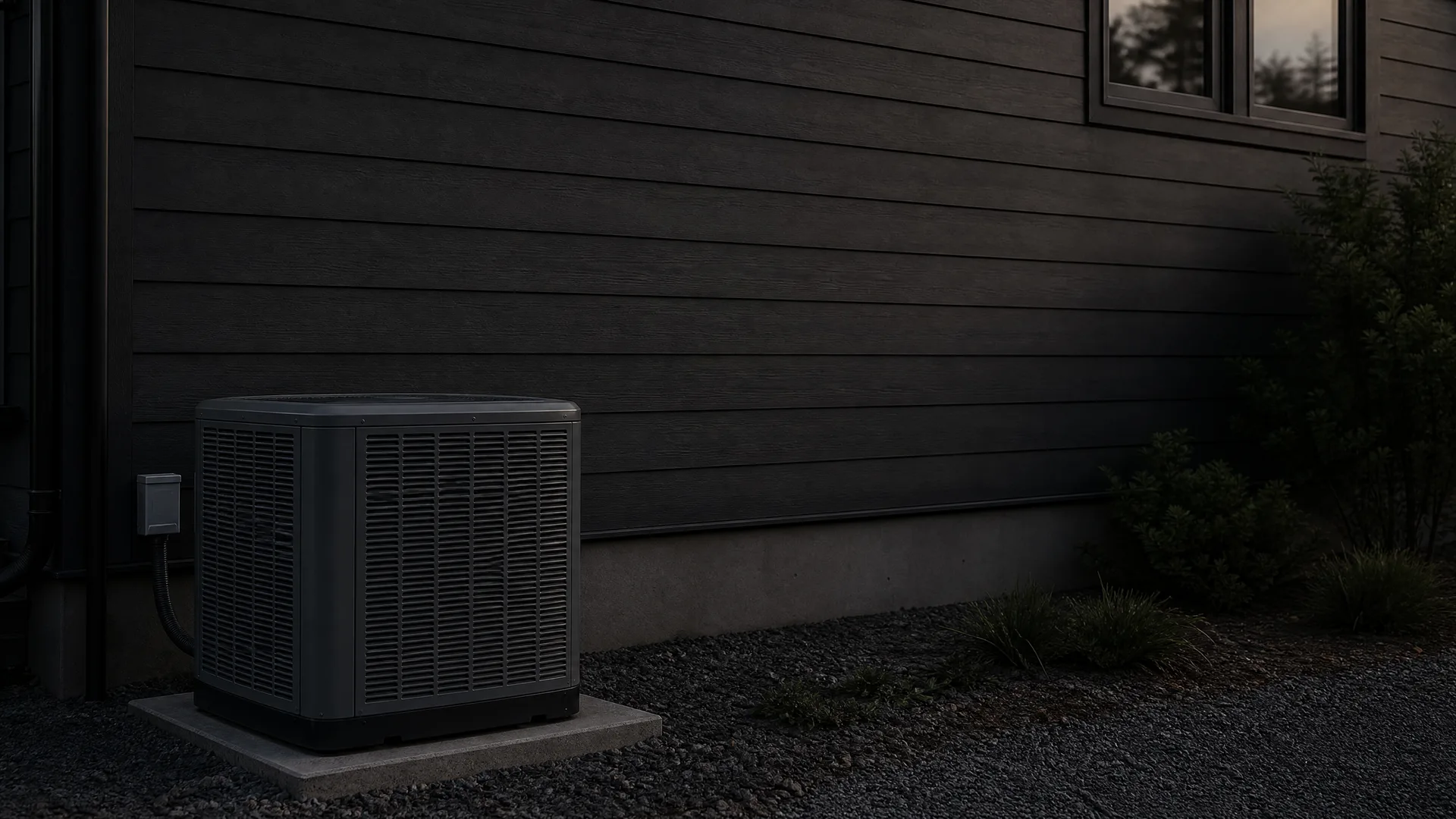
An outdoor condenser unit on a concrete pad beside a dark horizontal-lap-sided house, with gravel, shrubs and a small electrical disconnect box on the wall, in dim light.

A local pro for your heat pump repair

Answer a few questions instead of calling shop after shop.

Step 1 of 3: Equipment