

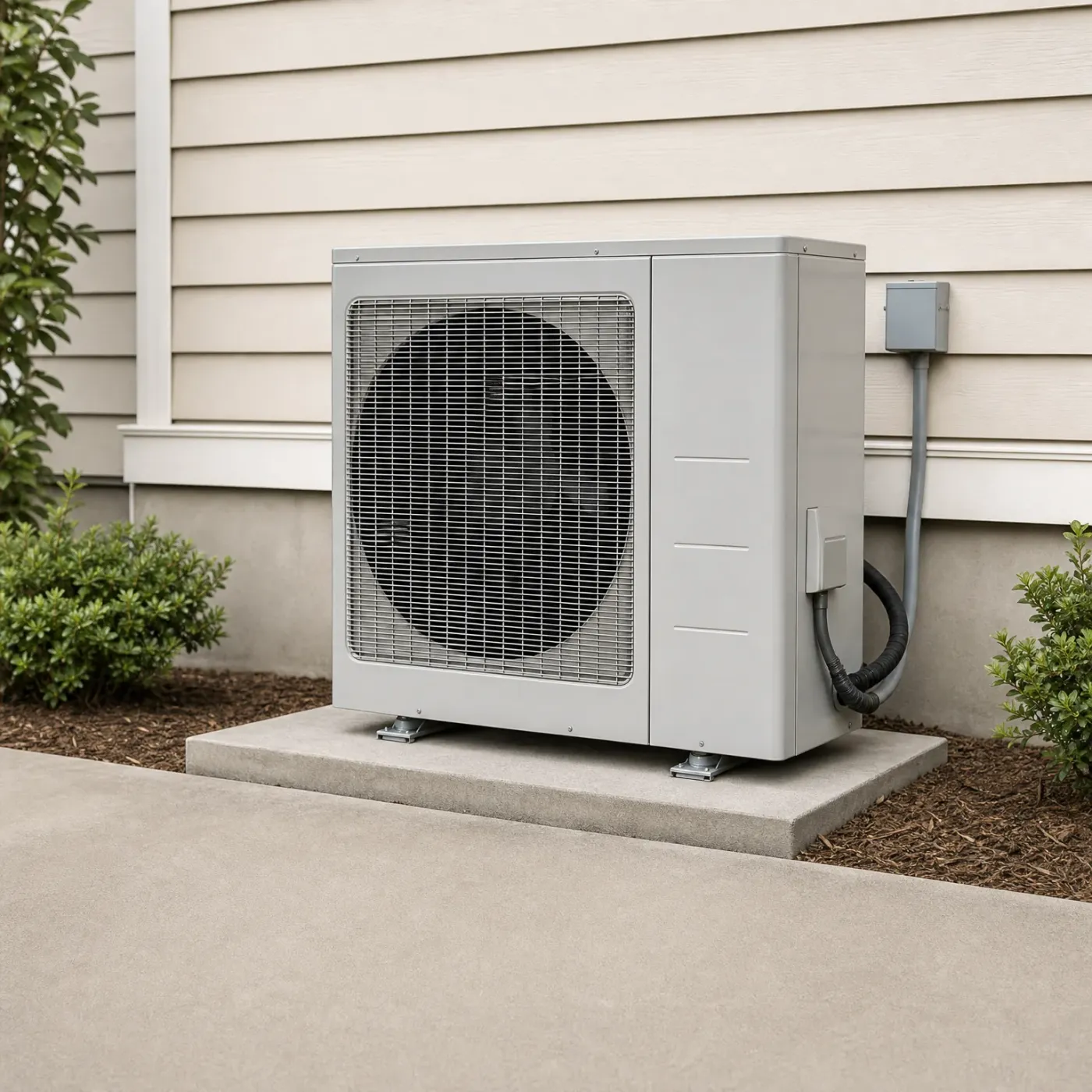
Running hard, working fine
This is a heat pump keeping up with a cold night. The fan runs steady, the lines stay clear, and the unit holds the pad without strain. It's earning its keep, not failing.
Say what's going on with your heat pump, and a pro who works on them reaches out.
Find a pro near meA heat pump that runs nonstop in a Tennessee winter is usually just doing its job. Below about 35 to 40 degrees outside, a heat pump pulls less heat from the air with each cycle, so it has to run longer and more often to hold your thermostat setting. On a cold morning it may run for hours straight, then kick on the backup heat strips to close the gap, which is normal when temperatures drop into the 20s or lower. The problem is when it runs nonstop and the house still isn't warm, or the outdoor unit is caked in ice that isn't clearing during defrost cycles. That points to something off: low refrigerant, a failing defrost control, a dirty coil, or a system that was undersized for your house to begin with. A unit working this hard for this long is worth having looked at before it wears out early or your power bill shows it.




This is a heat pump keeping up with a cold night. The fan runs steady, the lines stay clear, and the unit holds the pad without strain. It's earning its keep, not failing.
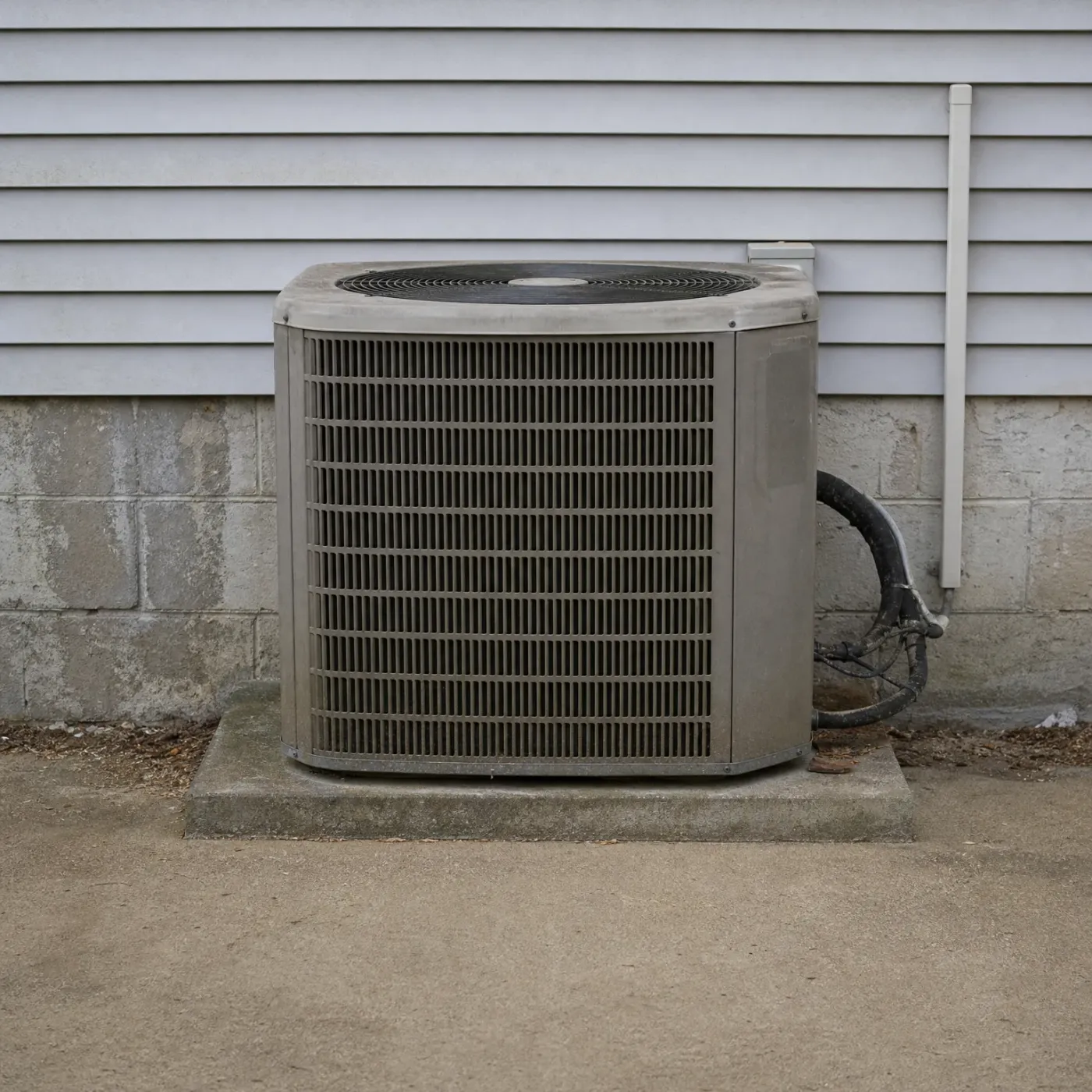
Frost builds along the lines instead of clearing between cycles, and the cabinet shows the wear of a unit that's been pushed past what a defrost cycle can fix. If your house won't hold temperature even with it running constantly, something inside needs a look.
Why does my heat pump run constantly when it's cold outside?
A heat pump doesn't make heat the way a furnace does. It pulls heat out of the outside air and moves it into your house. When it's 60 degrees out, there's plenty of heat in that air to grab, so the unit cycles on and off like an air conditioner would in summer. When it drops into the 20s and 30s, there's a lot less heat sitting in that air, so the unit has to keep moving air across the coil for longer to pull out the same amount. It's doing more work for less return each cycle, so it runs longer to make up the difference. That's the system working as designed, not struggling against something broken.


A heat pump running nonstop is normal on a cold Tennessee night, but a unit that runs nonstop and still can't hold 70 is a different problem, and it's not always obvious which one you've got from inside the house. Frost that won't clear, a hissing line, a compressor that sounds different than it did last winter, these are things worth having a contractor look at before the next cold snap tests the system harder. Most homes around here heat with electricity, so a heat pump that's struggling doesn't just mean a cold house, it means a power bill that climbs while the house still isn't comfortable. Sorting out whether yours is working as it should or losing the fight usually takes someone who can check the refrigerant charge and the outdoor coil in person. That beats spending an evening calling around town, repeating the same description of what the unit is doing to every contractor who answers.
When outdoor temperatures drop into the 20s, most heat pumps lean on electric resistance strips to make up the difference. That backup heat draws a lot more power than the compressor alone, which is why a bill can jump even when the unit itself is running the way it should. If your thermostat shows an "emergency heat" or "aux" light staying on for hours at a time, that's the strips doing most of the work, not a sign anything is broken.
Below freezing, frost builds up on the outdoor coil, and the system has to pause heating every so often to run a defrost cycle and melt it off. During defrost you might notice the outdoor fan stop, steam rising off the unit, or a short burst of cooler air inside before it switches back. These cycles happen on a timer or a sensor, and they add to the total time the system spends running without meaning anything is wrong with it.
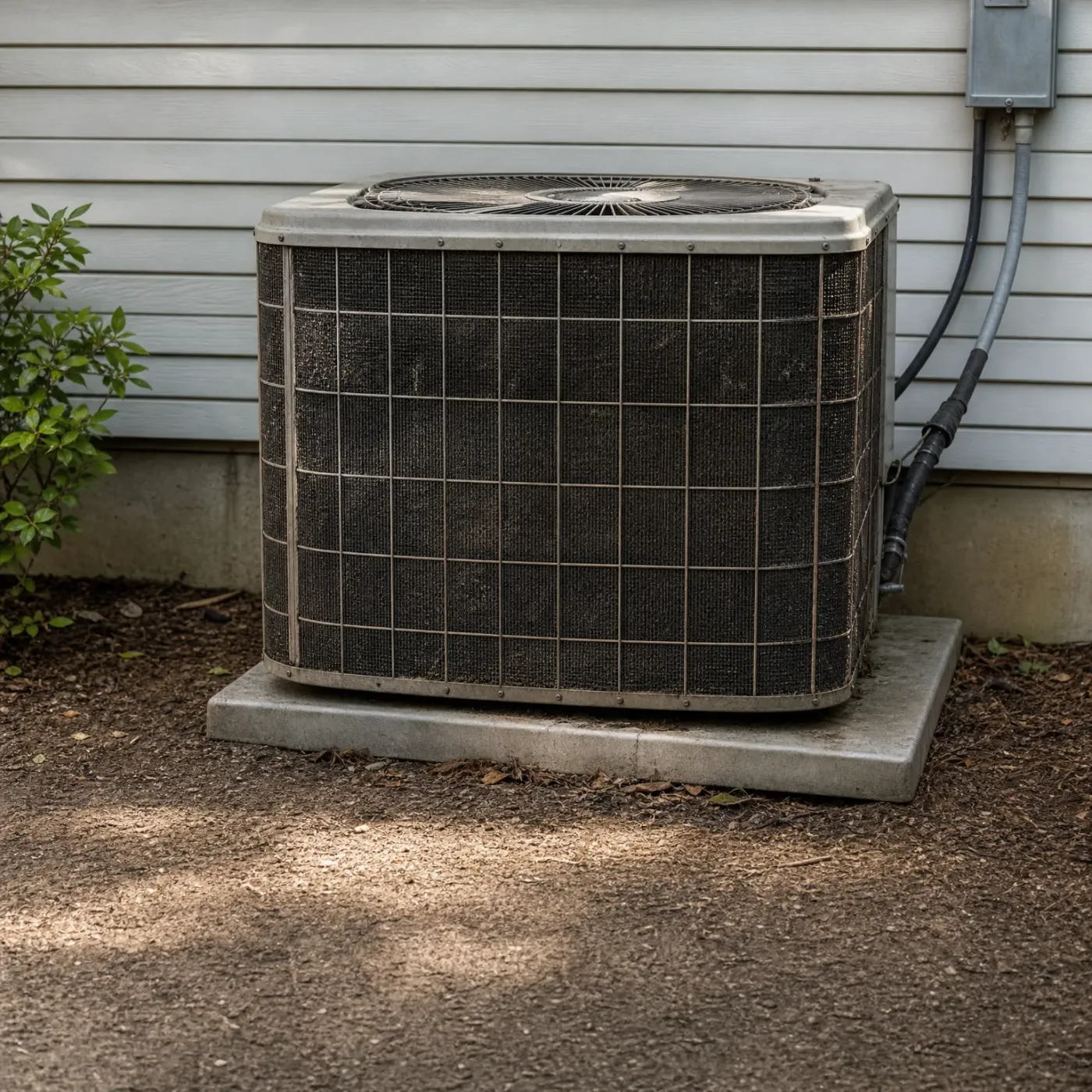
Strip heat pulls far more power than the compressor alone. If backup heat is running most of the night instead of only on the coldest ones, your next bill shows it.
If the house keeps losing ground no matter how long the unit runs, that's not the cold doing its normal work. Something in the system needs a look before it gets worse.
With most homes here heating on electricity, every hour your heat pump runs nonstop lands on your meter at 13.22 cents per kilowatt-hour. That's the statewide average, and it's part of why a long cold snap shows up on your bill before the weather even breaks.
EIA-861 2025 statewide residential average
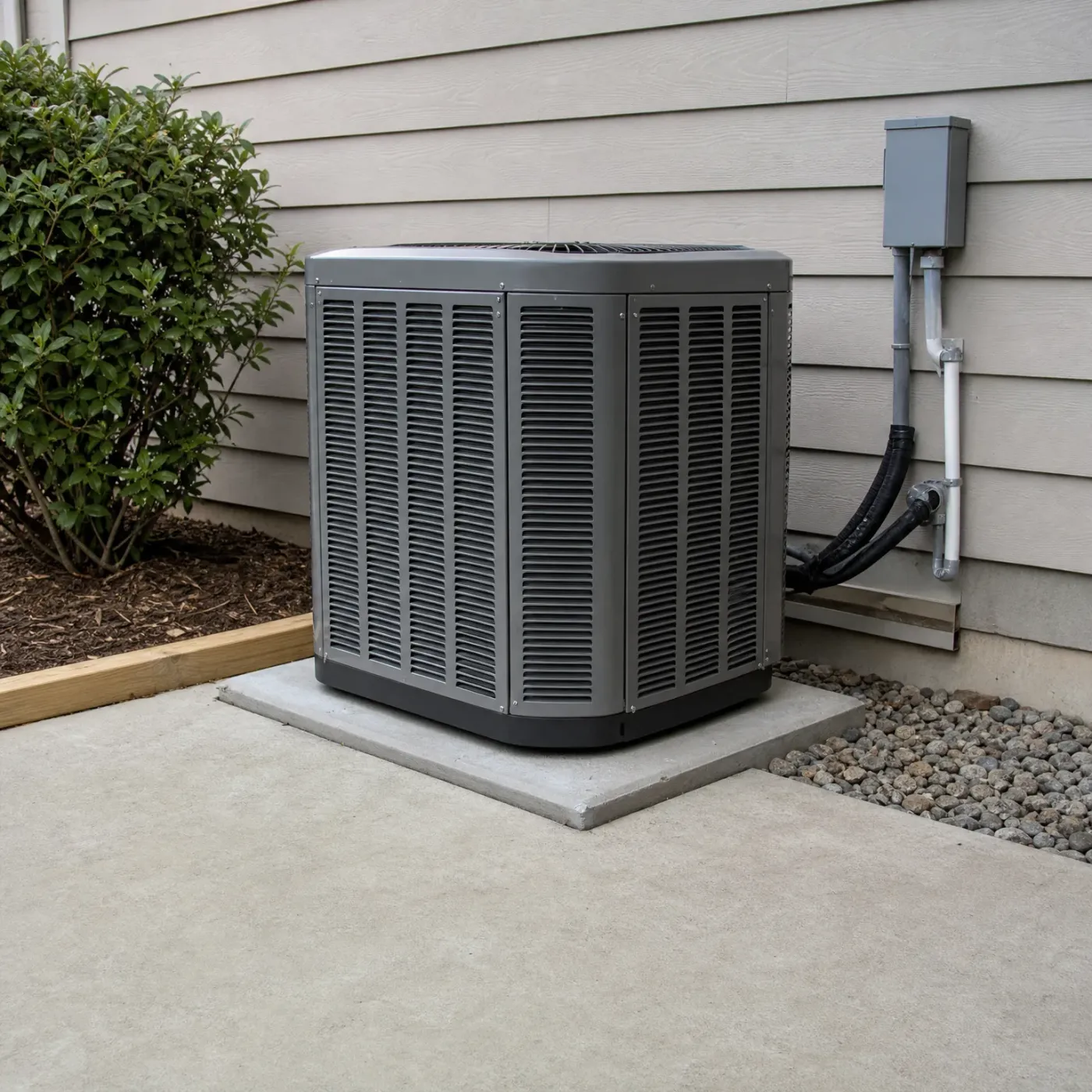
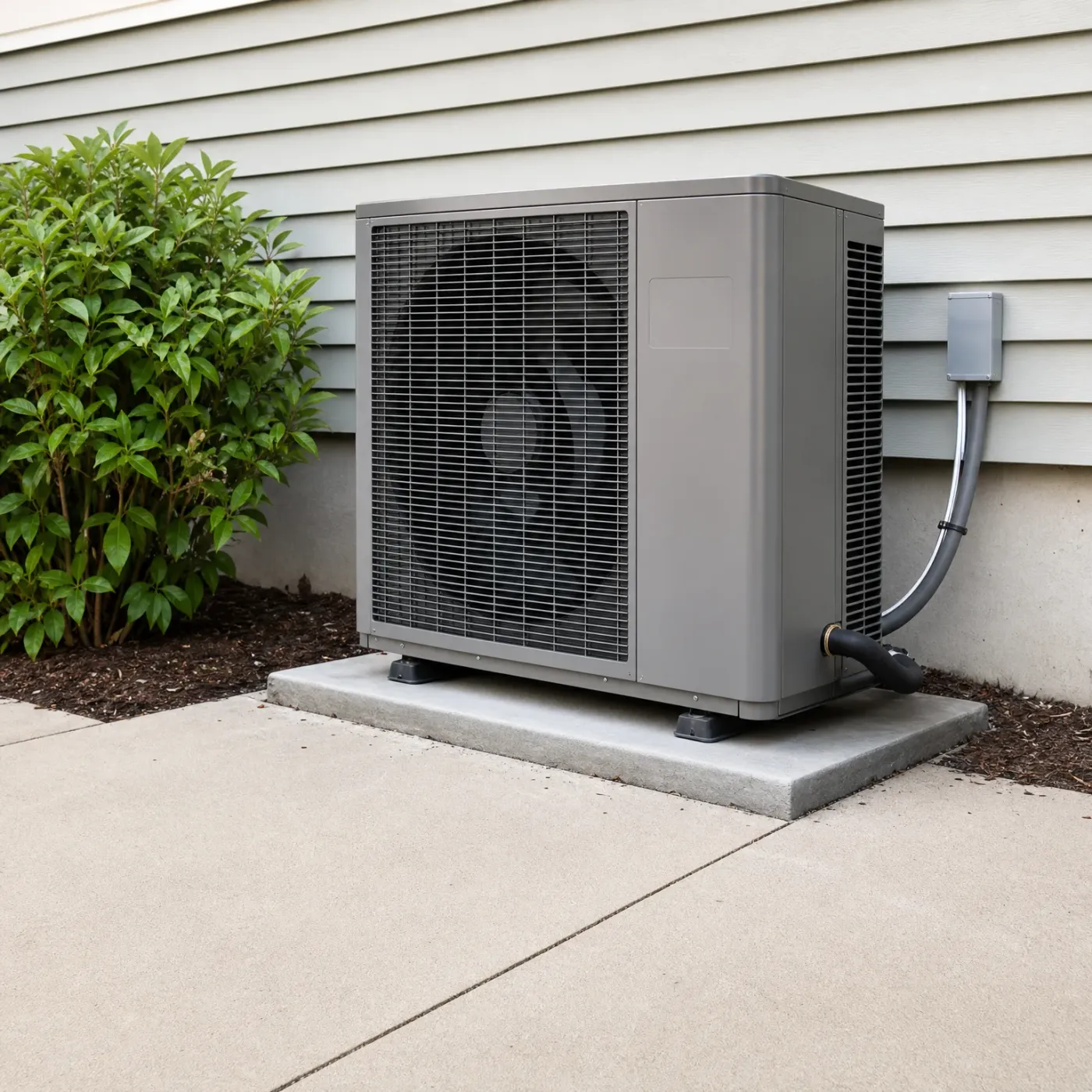
The refrigerant lines rise straight to the disconnect box without a trace of frost, and the gravel bed around the pad is dry. A unit working this hard on a cold night should still look like this. Long runtimes alone don't mean trouble.
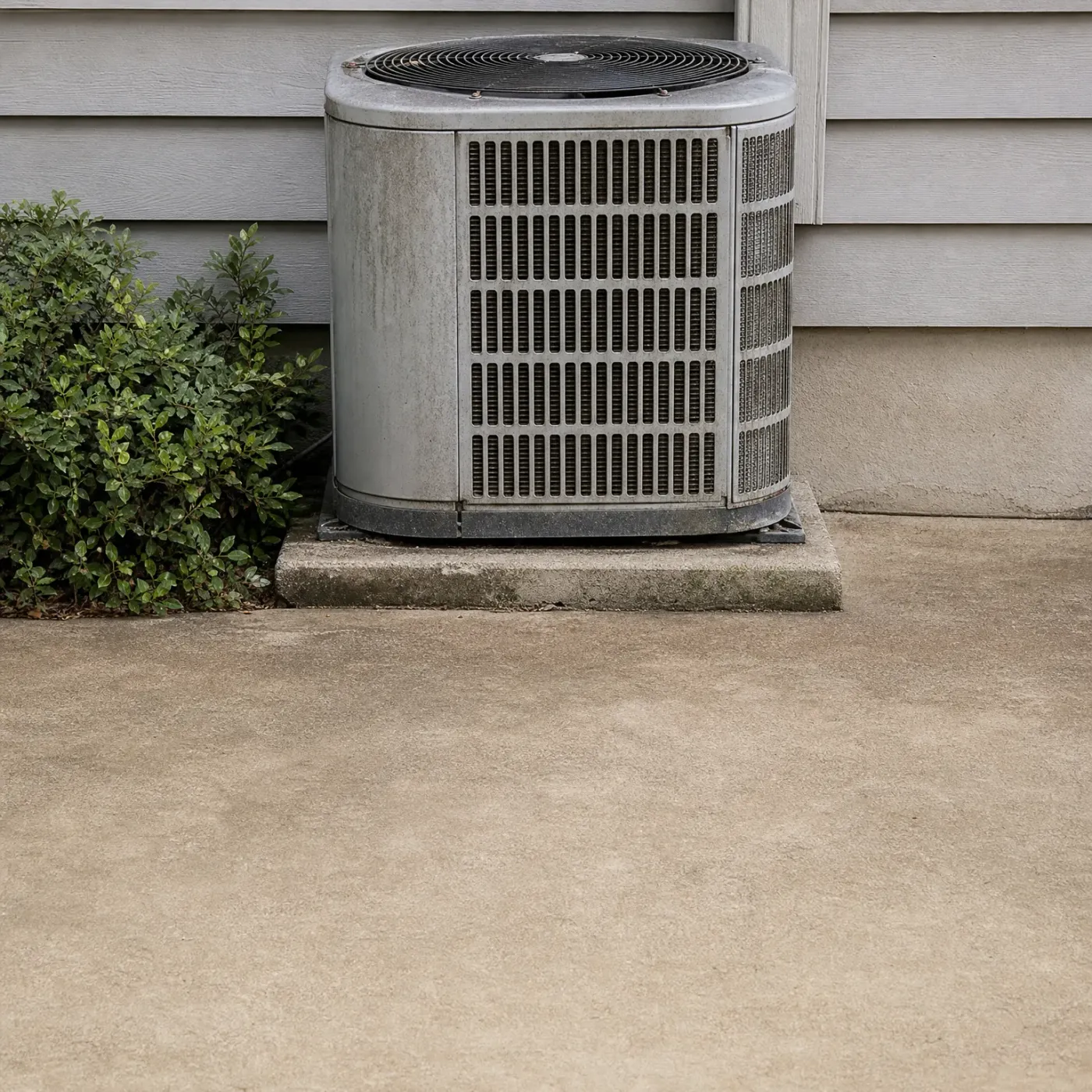
No frost, no ice, nothing visibly wrong, yet the unit keeps running without ever catching up. When a heat pump this is clean inside still can't hold your thermostat setting, the problem is probably in parts you can't see from the yard. That's worth a call, not a guess.

A heat pump that runs for hours on a cold Tennessee night is doing what it was built to do. Cold air gives up less heat each time it moves through the unit, so it has to keep working to hold your thermostat where you set it. By itself, that's not a reason to worry.
What's worth your evening isn't figuring out whether the sound coming from outside is normal. It's knowing for sure, instead of guessing through another cold stretch. If something in this page matched what you're seeing, that's worth a second look from someone who can check the lines, the frost, and the strips and tell you plainly what's going on. You'd skip the part where you call around and explain the same thing three times. A contractor who covers your part of Tennessee would get in touch and take it from there.

Answer a few questions instead of calling shop after shop.